Thursday, 19 June 2025

Resin Infusion Technology in Aerospace Manufacturing

1. Overview of Resin Infusion Technology

Resin Infusion, also known as Vacuum-Assisted Resin Transfer Molding (VARTM), is a closed-mold composite fabrication process in which dry reinforcement materials (like carbon fiber fabrics) are laid into a mold and infused with resin under vacuum pressure. This process creates strong, lightweight, and complex-shaped composite parts with high fiber content and minimal voids.

The trailing edge, being part of the moveable flight control surfaces like flaps and ailerons, benefits significantly from this technology. By reducing weight and improving structural integrity without sacrificing performance, resin infusion contributes to the aircraft’s overall efficiency, fuel savings, and reduced emissions. It also simplifies manufacturing, as it allows large, complex components to be produced in fewer steps with consistent quality.


Process Steps

ê Layup: Dry carbon fiber preforms are placed in a mold.

ê Vacuum Sealing: The mold is sealed with a vacuum bag.

ê Infusion: Resin is drawn into the dry fiber preform under vacuum.

ê Curing: The resin-impregnated part is heated to cure and harden.

ê Demolding: The finished part is removed and inspected.


2. Advantages in Aerospace Applications
No Feature Benefit
1 High Fiber Volume Ratio Improved strength-to-weight performance
2 Low Void Content Enhanced durability and structural integrity
3 Cost Efficiency Fewer autoclave requirements, lower energy usage
4 Design Flexibility Suitable for complex shapes and large parts
5 Environmental Control Reduced emissions and material waste
6 Weight Reduction Contributes to fuel efficiency
7 Improved Aerodynamics Ensures smooth, responsive control surfaces
8 Sustainability Reduced material waste and emissions in production
9 Scalability Supports large, integrated part manufacturing with fewer joints and fasteners.
>

Wednesday, 18 June 2025

The Dangers of Overreliance on Automation: Safety Concerns and Mitigation Strategies for Pilots


 Introduction

The integration of automation into aviation has revolutionized flight operations, leading to safer, more efficient skies. Systems like autopilot, flight management systems (FMS), electronic checklists, and automation aids reduce pilot workload and minimize human error. Nonetheless, overreliance on these automated systems poses significant safety concerns that require careful management. Understanding these risks, with illustrative examples and effective mitigation strategies, is vital for ensuring continued aviation safety.


The Rise and Benefits of Automation in Aviation

Automation systems streamline routine tasks such as maintaining altitude, course, and speed, allowing pilots to focus on strategic decision-making and monitoring. For instance, modern aircraft like the Boeing 777 or Airbus A350 use sophisticated autopilot and fly-by-wire systems to handle most of the flying, enabling more precise control and reducing fatigue. These advancements have contributed to a stark decline in accidents caused primarily by pilot error, underscoring their safety benefits.

The Dangers of Overreliance on Automation


Despite these advantages, overdependence introduces several risks, highlighted through real-world incidents:

1. Skill Degradation and Loss of Manual Flying Competence

Pilots may become less practiced in manual flying, leading to a dangerous skill decline. During routine flights, pilots often rely heavily on automation, and their manual flying skills may weaken over time. For example, pilots of the Air Inter Flight 148 in 1992 experienced difficulty manually controlling the aircraft after automation failure, resulting in a crash during descent due to descent rate mismanagement.

2. Automation Complacency and Inattention

Pilots might become complacent, trusting automation so much that they pay less attention to the systems or environment. This complacency can be problematic during system anomalies or failures. For instance, US Airways Flight 1549 (the "Miracle on the Hudson") demonstrated excellent manual flying after the bird strike disabled engines and automated systems, but it also highlighted the importance of pilot vigilance and readiness to manually control an aircraft in critical situations.

3. Automation Surprise and Unexpected Behavior

Automated systems can behave unpredictably, especially in abnormal situations, leading to confusion. The catastrophic crash of Air France Flight 447 in 2009 exemplifies this. The Airbus A330's pitot tubes iced over, leading to inconsistent airspeed readings and disengaging autopilot and autothrust. The pilots, overwhelmed and unsure of the situation, failed to manage the aircraft correctly, leading to a stall and crash. This incident exposes how automation that behaves unexpectedly requires pilot awareness and intervention skills.

4. Reduced Situational Awareness

Automation can cause pilots to lose situational awareness, especially in complex or rapidly changing scenarios. During the Qantas Flight 32 incident in 2010, an uncontained engine failure led to multiple system failures, including loss of electrical power and hydraulic systems. The pilots' high reliance on automated systems initially reduced their perception of the severity of the situation, but through disciplined manual management, they successfully controlled the aircraft.


Safety Concerns Associated with Overreliance

These examples illustrate common safety issues, including:

  • Delayed responses during critical failures due to over trust in automation.
  • Loss of manual proficiency that hampers pilots' ability to take control effectively.
  • Situational blindness during complex emergencies, where automation masks evolving hazards.


Mitigation Strategies

To counter these dangers, the aviation industry employs several strategies:

1. Continuous Pilot Training and Simulation

Regular, rigorous training maintains manual flying skills and familiarizes pilots with automation failures. High-fidelity simulators replicate emergency scenarios, such as the loss of autopilot or sensor failures. For example, pilots train extensively on simulator scenarios mimicking stalls, system malfunctions, or automation surprises, preparing them for real emergencies.

2. Automation Management and Crew Resource Management (CRM)

Pilots are trained to manage automation actively rather than passively relying on it. This includes understanding when and how to disengage autopilot, manually control the aircraft, and cross-check automation outputs. CRM fosters effective communication and teamwork, ensuring that pilots work cohesively during abnormal events, as demonstrated in the successful crew coordination during the Qantas Flight 32 incident.

3. Strict Procedural Checks and Manual Overrides

Procedures such as automatic system checks, manual control cross-checks, and override protocols help prevent complacency. For instance, pilots are instructed to perform manual flight path monitoring during automation to prevent unnoticed deviations.

4. Design Improvements and Transparent Systems

Developing automation systems with intuitive interfaces, clear feedback, and fail-safe behaviors reduces misunderstandings. For example, Airbus’s fly-by-wire systems operate with clear pilot alerts and predictable responses, aiding situational awareness.


Conclusion

Automation has revolutionized aviation safety, but its overuse carries significant risks—skill degradation, automation complacency, unpredictable.

Author : GR Mohan

✈️ Boeing’s Safety Management System: A Culture in Crisis

Introduction

 In the wake of multiple high-profile incidents, Boeing once again finds itself under intense scrutiny—this time, not just for technical failures, but for the deeper, structural issues eroding its internal safety culture. A comprehensive review by an FAA-appointed Expert Panel has painted a stark picture: Boeing’s Safety Management System (SMS) is functional on paper, but dysfunctional in practice.

The panel, established by a congressional mandate, reviewed over 4,000 pages of documentation, conducted extensive employee interviews, and visited six Boeing facilities. Their conclusion was clear and concerning: Boeing has failed to embed safety as a lived, shared responsibility across its organization.

Procedures Without Clarity

Although Boeing’s SMS adheres to FAA and ICAO standards in form, the panel found the implementation fragmented and poorly understood by employees. Many workers were unclear about their roles in upholding safety, with procedures constantly changing and too complex to follow consistently. The panel noted a troubling lack of awareness of key safety metrics at every level, undermining the very purpose of a safety management system.

Self-Policing Gone Wrong

One of the most critical findings concerned Boeing’s Organization Designation Authorization (ODA) structure—a system that allows certain Boeing employees to act on behalf of the FAA in safety oversight roles. Originally designed to streamline certification, the system has instead left employees vulnerable to retaliation, particularly when reporting safety issues.

Despite changes to protect these Unit Members (UMs), retaliation remains a concern, with salary decisions and furloughs potentially tied to whistleblowing. The message is chillingly clear: speaking up may come at a personal cost.

Culture of Silence

Ironically, while Boeing promotes its internal "Seek, Speak & Listen" culture, many employees told the panel they didn’t feel safe doing so. Interviews were perceived as audits, not conversations. Some reported receiving legal briefings beforehand—hardly an environment conducive to open dialogue.

This culture of guarded communication runs counter to effective safety management, where early detection of risks depends on trust, openness, and proactive reporting.

Brain Drain and Engineering Gaps

COVID-19 accelerated a worrying trend at Boeing: the loss of senior engineering talent. As experienced professionals retired or left, fewer mentors remain to train the next generation. The result? A decline in first-pass quality of documentation, certification plans, and test protocols.

The panel warned of a dispersed, uncoordinated engineering structure, particularly in locations outside Washington State, where engineers reported feeling isolated and unsupported.

The Pilot's Voice: Marginalized

Human factors—once a Boeing hallmark—have taken a backseat in recent years. Reorganizations, decentralization, and leadership changes have weakened the influence of pilots, product support, and human factors experts.

The erosion of pilot involvement in flight deck design, training feedback, and operational safety was a key finding. The pilot voices do not consistently reach decision-makers—and that representation depends more on personalities than process. The panel recommended giving the chief pilot greater authority to ensure frontline insights shape training, flight deck design, and safety-related choices.

Is SMS at Boeing Sustainable?

A recurring theme in the panel’s report was doubt—not just about the current state of Boeing’s SMS, but its future viability. Employees across functions expressed scepticisms about the program’s staying power. Delayed feedback, minimal communication, and a resistance to disrupting legacy processes have left many questioning the company’s commitment.

Even the FAA's own personnel voiced concerns about whether the agency is equipped to effectively oversee Boeing’s evolving SMS under expanding regulatory expectations.

Boeing’s Response: Promises vs. Performance

Boeing CEO Dave Calhoun has pledged greater transparency and commitment to a safety-first culture, stating, “This increased scrutiny—from ourselves, our regulator, or others—will make us better.”

The truth is, only meaningful action on the panel’s 53 recommendations will show whether Boeing is prepared to back its words with real reform.

Operational Takeaways for Aviation Professionals

As trusted stewards of safety, our members should take the following lessons to heart:

 Compliance is not enough: SMS must be lived, not just documented.

 Encourage open reporting: Foster environments where crew and staff feel safe speaking up.

 Demand structured pilot input: Operational insight should influence design and training, not depend on corporate hierarchy.

 Engage in feedback loops: Monitor how effectively OEMs and regulators respond to front-line input and safety data.· 

 Champion mentorship: Protect and invest in transferring engineering and operational expertise to the next generation.

The Road Ahead

Boeing stands at a crossroads. The gap between its safety ideals and operational reality is wide—and closing it will take more than slogans or reorganizations. It requires:

  • Clearer accountability structures
  • Empowered engineering and flight operations voices
  • Protection for whistleblowers 
  • A genuine shift toward transparency and listening

In aviation, safety is not just compliance—it’s culture. And unless that culture is rebuilt from the inside out, no checklist or procedure can compensate for what’s missing.

Author : GR Mohan

xLS A Common Way to Fly all Straight Approaches

Tuesday, 17 June 2025

Further Preventing Loss of Control In-flight

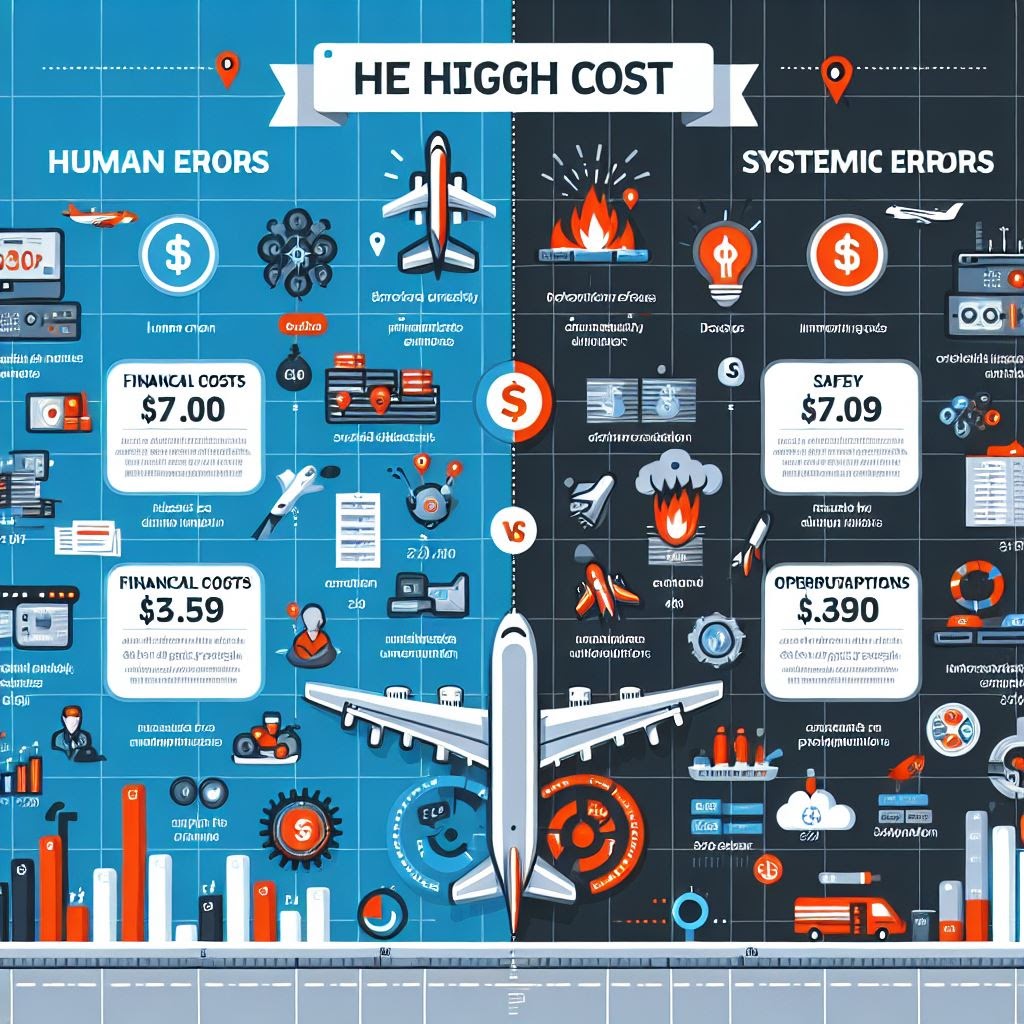
✈️ The High Cost of Human and Systemic Errors in Aviation

Introduction

In aviation, safety is never coincidental. It’s the product of engineering excellence, stringent regulation, procedural discipline, and a culture of relentless improvement. Despite these layers of defense, accidents still occur—and when they do, human error combined with systemic failure is often at the core.

While pilots operate with skill and professionalism, they are still human—subject to fatigue, distraction, and cognitive limitations. Meanwhile, the very systems designed to assist them—such as Flight Management Systems (FMS) and performance calculation software—are only as effective as the data they receive and the clarity of their design.

The aviation community has learned, sometimes tragically, that even small input errors can have catastrophic outcomes. The phrase “Garbage in, accident out” is not a cliché—it’s an operational hazard.

Saturday, 14 June 2025

✈️ Take-off Distance Monitoring Systems (TDMS): Your Safety Co-Pilot on the Runway

 When a pilot pushes the throttles forward for take-off, there’s one big question in the background:

“Will I have enough runway to get airborne safely?”


In the high-stakes world of aviation, every inch of runway counts. Ensuring an aircraft can safely achieve takeoff speed and altitude without running out of pavement is paramount. 

That’s where Take-off Distance Monitoring Systems (TDMS) step in — acting like an intelligent, ever-vigilant co-pilot that keeps an eye on performance in real time. Whether it’s TAMS (Take-off Acceleration Monitoring System), TOS (Take-off Surveillance), or other advanced systems, their mission is simple but vital:


🛑 Warn the crew early if the aircraft isn't accelerating as expected, so there's still time to reject the takeoff safely.

Why Monitoring Take-off Distance is Absolutely Essential

The need for meticulous take-off distance monitoring stems from several critical factors:

1. Safety First, Always: At its core, monitoring ensures that there's always sufficient runway length for a safe and successful take-off. Without precise understanding and real-time validation, the risk of a dangerous runway overrun drastically increases.

2. Certification and Precision Engineering: Accurate measurements of take-off distances are not just for daily operations; they are fundamental to the entire aircraft development process. These measurements are essential during the rigorous certification of new aircraft types and are meticulously verified during production flight tests. This ensures that the aircraft performs exactly as designed under certified conditions.

3. Optimizing Performance in Every Condition: Understanding and accurately predicting take-off distances helps determine an aircraft's optimal performance across various runway surfaces (e.g., dry, wet, contaminated) and environmental conditions (e.g., temperature, altitude, wind). This data is crucial for flight planning and operational flexibility.

4. Learning from Real-World Experience (PIREPs): Pilot Reports (PIREPs) on actual take-off distances observed under non-standard conditions – such as a contaminated runway – are invaluable. This real-world feedback helps refine performance models, enhance pilot training, and update operational procedures, continually improving safety margins.

What Goes On Behind the Scenes: The Mechanics of Take-off Distance Monitoring


TDMS and TAMS are sophisticated systems that involve continuous real-time analysis:

· Precise Take-off Distance Calculation: Before the take-off roll even begins, advanced monitoring functions like Airbus's Take-off Surveillance (TOS) calculate the expected lift-off distance. This calculation is dynamic, based on a wealth of pre-entered performance data, including the aircraft's weight, engine thrust settings, flap configuration, and more. This forms the baseline for safe operation.

· Real-time Comparison to Available Runway: As the aircraft accelerates down the runway, the system continuously compares the calculated required distance with the actual available runway length. This dynamic comparison ensures that the take-off remains feasible within the physical constraints of the runway, preventing situations where the aircraft might require more runway than what's ahead.

· Enhanced Situational Awareness for Pilots: Take-off monitoring systems are designed to empower pilots with superior situational awareness. They provide critical "situation-advisory flags" (SAFs) or aural warnings. These alerts are invaluable in notifying pilots about potential issues, such as insufficient acceleration or an unexpected reduction in available runway length (e.g., due to an incorrect lineup).

· The Power of Take-off Acceleration Monitoring (TAMS): A key component of these systems is TAMS. This specific feature relentlessly monitors the aircraft's acceleration throughout the take-off roll. If the system detects any signs of insufficient acceleration – perhaps due to an engine issue, incorrect thrust setting, or even residual braking – it immediately alerts the flight crew. This early warning is crucial, as it allows pilots to make a timely and informed decision to reject the take-off if needed, before reaching a point of no return.

🔍 How Does Take-off Distance Monitoring Work?

1. Before You Roll: Pre-Takeoff Setup

    • Data Entry: The crew loads up key inputs like aircraft weight, take-off speeds (V1, VR, V2), flap settings, thrust levels (like FLEX temp), runway length, and outside air temperature (OAT).
    • Performance Planning: Based on that info, the system calculates how much runway should be needed — and how quickly the aircraft should accelerate.
    • Configuration Check: Modern systems even ensure settings like flaps and trim match what was entered.

2. During the Roll: Real-Time Monitoring

As the aircraft starts rolling:

📡 GPS/INS sensors track the position and acceleration.

🛞 Wheel sensors monitor ground speed.

🔧 Engine sensors verify thrust output.

The system constantly compares actual performance with expected values. If the aircraft isn’t accelerating fast enough, the crew is alerted — fast.

3. When Things Go Off Track: Warnings and Alerts

These systems don’t stay silent if something goes wrong.

They’ll call out:

🔊 “Insufficient Acceleration”

🔊 “Taxiway Takeoff”

🔊 “Insufficient Runway Length”

Visual cues (like ECAM messages on Airbus) tell the crew what’s happening — and often suggest rejecting the takeoff if the conditions aren’t safe.

🔍 A Look at the Systems in Action

System

Function

TAMS

Focuses on monitoring acceleration during the take-off roll. Simple, but life-saving.

TOS (Take-off Surveillance)

Verifies aircraft config, runway alignment, and lift-off distance vs runway length.

TOM (Take-off Monitoring)

Compares real-time acceleration with predicted values. If it’s off by more than 15% (e.g., at 90 knots), you’ll get a warning.

RAAS (Runway Awareness and Advisory System)

Adds location-based runway alerts. Warns about short runways, wrong runway entries, and provides “distance remaining” advisories.


✅ Why TDMS is a Game-Changer
🧠 Smarter Decision Making: Pilots get real-time feedback to make safer go/no-go decisions.
⚠️ Prevents Human Errors: Catches data entry mistakes or miscalculations before they become dangerous.
🕒 Early Warnings: Gives precious seconds to act — especially during high-speed takeoff rolls.
📉 Reduces Incidents: Helps prevent overruns, especially on contaminated or short runways.
🧰 Reduces Workload: The system handles the math so the pilots can focus on flying.
🔧 Regulatory Push: Aviation authorities like EASA are backing TDMS as essential safety tech. 

The Future of Runway Safety

Take-off Distance Monitoring Systems represent a significant leap forward in aviation safety. By leveraging cutting-edge sensor technology, precise algorithms, and real-time data analysis, these systems provide an invaluable layer of protection against runway overruns. They empower pilots with critical information when every second counts, reinforcing that in aviation, safety is not just a priority – it's an absolute guarantee, meticulously maintained by technological innovation.

✈️ Final Thoughts: A Safety Net You Never Knew You Needed

  • TDMS isn’t just about numbers — it’s about giving the crew one last line of defense when things don’t go according to plan.
  • Whether it’s a subtle thrust anomaly, wrong runway lineup, or misjudged weight entry, these systems catch the error before it turns into an emergency.
  • In a world where precision and timing are everything, TDMS is the quiet guardian of every successful takeoff.

Author : GR Mohan

Safety Concerns on Airbus A320 Family: An Overview

Background The in-flight upset recently experienced by a JetBlue aircraft, followed by the  Emergency Airworthiness Directive (EAD) that led...