A Critical Assessment of GTRE’s Kaveri Program
The development of a modern fighter-class turbofan engine represents one of the most technologically demanding undertakings in aerospace engineering. It requires mastery over high-temperature metallurgy, advanced aerothermodynamics, precision manufacturing, control systems integration, long-duration reliability validation, and a deeply integrated industrial ecosystem. Over the past several decades, India’s principal institutional vehicle for achieving this capability has been the Gas Turbine Research Establishment (GTRE), a laboratory under the Defence Research and Development Organisation (DRDO).
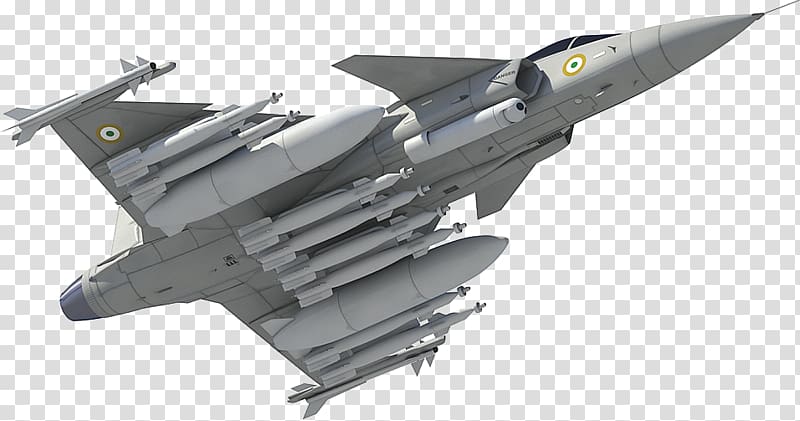
The most ambitious expression of this mandate was the GTX-35VS Kaveri engine program, launched in 1989 to power the Light Combat Aircraft, later known as the HAL Tejas. The program was intended to deliver a fully indigenous, afterburning turbofan capable of producing approximately 52 kN of dry thrust and 81–90 kN of wet thrust. After nearly four decades of effort, the engine failed to qualify for fighter service and was delinked from the Tejas program. The consequences were strategic: India’s indigenous fighter entered service powered by foreign engines.
While aero-engine development is universally complex and often prolonged, the Kaveri experience reveals not merely technical difficulty but a pattern of systemic failure. These failures spanned thermodynamic design assumptions, materials capability, governance structure, infrastructure readiness, and ecosystem integration. By 2021, the program had expended over ₹20 billion (equivalent to ₹50 billion in 2023), with only partial milestones met.
The Core Technical Problem: Failure to Achieve Rated Dry Thrust
The Kaveri engine's primary technical failure centres on its inability to consistently achieve targeted dry thrust levels across the full operational envelope, a critical measure of core integrity. Dry thrust, generated without afterburner, hinges on the efficient integration of compressor, combustor, and turbine stages, encompassing airflow management (designed at 78 kg/s), pressure ratios (21.5:1 overall), and thermal tolerances.
Despite efforts, the engine attained only 48.5–51 kN in dry thrust during high-altitude tests by 2022—below the 52 kN design goal—and fell short of the 83–85 kN wet thrust required for advanced Tejas variants. As DRDO Chairman Samir V. Kamat noted in 2025, while the engine performs adequately at 72 kN wet thrust, it lacks the scalability for Tejas integration.
Analyses, including the 2011 Comptroller and Auditor General (CAG) report, identified key deficiencies: inefficiencies in compressor stages (featuring transonic blading in low-pressure sections and variable inlet guide vanes in high-pressure), constraints on turbine inlet temperature (TIT ≈1,427°C) due to material limitations, and airflow mismatches. Absent advanced single-crystal superalloy turbine blades with internal cooling channels and thermal barrier coatings, the thermodynamic cycle was inherently restricted, necessitating derating to avert creep, thermal fatigue, and structural failure.
This underperformance arose from an overly ambitious cycle design that surpassed India's domestic materials and manufacturing capabilities at the time. Repeated turbine blade failures in the early 2000s prompted imports from France's Snecma (now Safran), underscoring the gap. Fundamentally, dry thrust shortfalls—not merely afterburning deficits—exposed core-level flaws in compressor efficiency, achievable TIT, and integration, as thermodynamic aspirations outpaced available ecosystem support.
Ambition–Capability Mismatch in Cycle Design
The Kaveri was conceived as a near fourth-generation class engine in a country without prior operational turbofan production experience. Its targeted pressure ratios and temperature regimes required advanced single-crystal turbine blades, sophisticated internal cooling passages, and high-precision casting technologies.
India did not possess a mature ecosystem for single-crystal superalloys during critical development phases. Without this capability, sustained high-temperature operation at design limits becomes structurally unviable. Turbine blades experience creep, thermal fatigue, and life-cycle instability. As a result, TIT must be reduced, which in turn lowers thrust.
This created a structural contradiction: the engine’s design cycle demanded performance levels that the industrial base could not yet support. Instead of recalibrating ambition to ecosystem readiness, the program attempted incremental fixes within an over-ambitious architecture.
Weight Growth and Performance Degradation
As development progressed, the engine reportedly gained weight relative to its original targets. Weight growth in turbofan programs typically reflects structural reinforcement, redesign for stress tolerance, or compensatory adjustments to address performance shortfalls.
An increase in mass reduces thrust-to-weight ratio and further constrains fighter integration viability. In high-performance aircraft, propulsion margins are unforgiving. Even moderate weight escalation can render an engine noncompetitive.
This weight spiral was not merely a numerical inconvenience; it was symptomatic of deeper, unresolved engineering trade-offs.
Altitude Testing and Operational Envelope Collapse
A pivotal moment in the Kaveri program occurred during high-altitude testing conducted abroad in the early 2000s. These tests revealed that the engine could not consistently demonstrate stable performance across the required operational envelope.
Altitude testing exposes surge margin deficiencies, airflow instability, temperature stress behaviour, and transient response weaknesses. Failures at this stage indicate that laboratory-level validation had not translated into flight-representative robustness.
Following these setbacks, the engine was removed from the Tejas integration roadmap. That decision marked the effective termination of its fighter role.
Governance and Systems Engineering Deficiencies
Technical challenges alone do not fully explain the program’s outcome. Several systemic governance weaknesses appear to have compounded the engineering problems.
First, there were reports that external consultants and international experts raised concerns about core sizing, achievable pressure ratios, and realistic temperature limits. Allegations persist that more radical redesign options were not adopted decisively when these warnings emerged. In complex aerospace programs, early architectural reset is often painful but necessary. Delayed course correction can lock a project into incremental compromise rather than structural resolution.
Second, the design freeze discipline appears to have been weak. The Tejas airframe itself evolved over time, gaining weight and altering performance demands. Instead of resetting the propulsion architecture to match revised aircraft requirements, the engine program continued along its established trajectory. Requirement drift layered complexity onto an already stressed design.
Third, the institutional structure under which GTRE operated was oriented toward research and prototype development rather than industrial-scale certification and reliability growth. Fighter engines require not only technological innovation but thousands of hours of endurance validation, statistical reliability tracking, and production engineering culture. That industrial maturity was not fully aligned with program ambition.
Infrastructure and Ecosystem Constraints
At the time of critical development phases, India lacked comprehensive indigenous high-altitude test facilities and long-duration endurance test cells for fighter-class engines. Reliance on foreign testing infrastructure meant that key performance truths emerged late in the program lifecycle.
Equally significant was the limited integration of private-sector metallurgy, precision manufacturing, and advanced coating technologies. A fighter turbofan is not the product of a single laboratory; it is the output of a coordinated industrial ecosystem. That ecosystem was still embryonic during Kaveri’s formative years.
Moreover, coordination between designer (GTRE), manufacturer (HAL), and end user (Indian Air Force) appears to have lacked the tight iterative feedback mechanisms seen in established engine houses. Effective propulsion development requires continuous user-informed refinement.
Strategic Consequences
The delinking of the Kaveri engine from the Tejas program had significant strategic consequences. Tejas entered service with GE engines under contracts exceeding $105 million in 2004, reinforcing foreign propulsion dependence and increasing cost and schedule exposure. The move also affected DRDO’s propulsion credibility, with implications for future ambitions such as the AMCA, where engine autonomy is critical.
However, the program yielded technological spin-offs. A dry-thrust Kaveri Derivative Engine (48–50 kN) is being positioned for the Ghatak UCAV, while a 12 MW marine variant (KMGT) has been explored for naval use. Industrial partnerships, including with BHEL, and advances in combustor technology, indigenous FADEC (KADECU), and metallurgy have strengthened technical foundations for future efforts, including a potential 75–79 kN “Kaveri 2.0.”
Despite these gains, India has yet to field an operational indigenous fighter-class turbofan, leaving the original strategic objective unfulfilled.
Inference
The Kaveri program did not fail simply because aero-engines are difficult to build. It failed because systemic misalignments were never fully corrected.
1) Thermodynamic ambition exceeded material capability.
2) Cycle design was not recalibrated when ecosystem constraints became evident.
3) Dry thrust shortfalls exposed core-level limitations.
4) Altitude testing revealed operational fragility.
5) Governance mechanisms did not enforce early architectural reset.
6) Infrastructure lagged performance targets.
Taken together, these factors constitute a systemic failure rather than an isolated technical setback.
GTRE did build valuable knowledge in gas turbine science, combustor design, and control systems. However, the central strategic mandate—to deliver a certified indigenous fighter turbofan—remains unmet.
If future propulsion programs are to succeed, ambition must be synchronised with industrial readiness, design governance must enforce hard reset decisions when required, and ecosystem development must precede rather than follow thermodynamic aspiration.
Only then can propulsion sovereignty move from aspiration to operational reality.