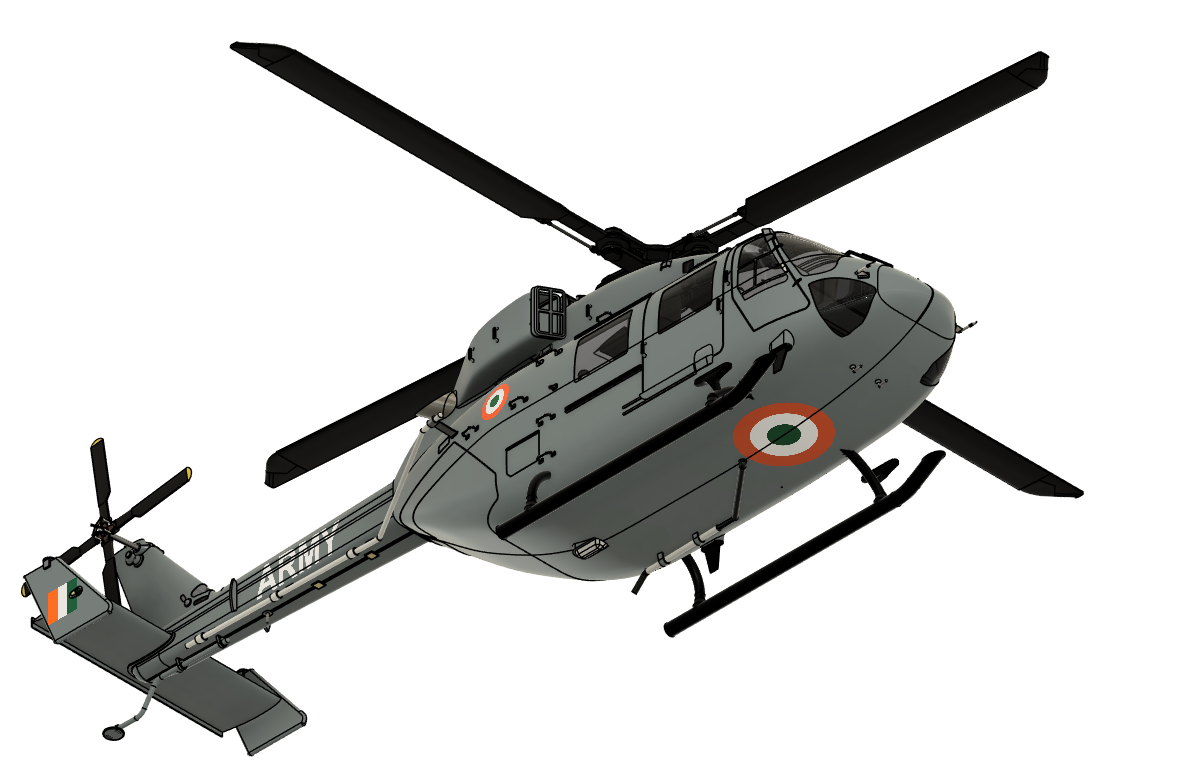
In the dynamic world of aerospace, Hindustan Aeronautics Limited (HAL), India's venerable state-owned powerhouse, stands at a pivotal juncture as we enter 2026. Boasting a market capitalisation of around ₹2.7-2.9 lakh crore—roughly $32-35 billion USD—HAL holds its ground as one of the globe's top aircraft manufacturers, often ranked fourth behind titans like Airbus, Boeing, and Lockheed Martin. This financial stature is commendable, yet it conceals underlying challenges that demand attention. As a cornerstone of India's defence landscape, HAL is finding itself gradually edged out of marquee initiatives such as the Advanced Medium Combat Aircraft (AMCA) due to persistent delays, technological hurdles, and operational inefficiencies. The emerging emphasis on private sector collaboration marks a welcome shift away from HAL's long-held monopoly, encouraging the company to evolve and secure its place in a rapidly changing industry it has long shaped.
Unpacking HAL's Challenges: Reflections on a Legacy of Caution
For more than two decades, HAL has thrived under the umbrella of
government-backed exclusivity in India's aerospace arena, drawing on
lucrative contracts and international technology-sharing pacts. Founded in
1940 and reorganised in 1964 via the fusion of Hindustan Aircraft Ltd. and
Aeronautics India Ltd., HAL has traditionally excelled in licensed
manufacturing over bold, homegrown innovation. This has earned it the
unfortunate moniker of a "garage for foreign jets," where it assembles
models like the MiG-21, Su-30MKI, BAE Hawk and Jaguar without fully
ascending to the ranks of a holistic design innovator.
The Challenge of Technology Integration
HAL's collaborations with overseas original equipment manufacturers (OEMs)
were meant to foster deep technological uptake, but the results have fallen
short of expectations. The Su-30MKI initiative, launched in the late 1990s,
saw HAL produce 272 units at its Nasik plant under license from Russia's
Sukhoi. Likewise, the Jaguar program from the 1980s yielded over 125
aircraft, many still operational after enhancements. Regrettably, these
ventures were approached more as routine assembly lines than gateways to
mastering essential technologies such as "hot-core" engines or cutting-edge
avionics.
This measured pace contrasts sharply with the strides made by China's
Aviation Industry Corporation of China (AVIC). In a similar timeframe, AVIC
has pursued foreign know-how with Vigour through partnerships, joint
ventures, and robust domestic R&D, leaping from mere licensed builds to
pioneering fifth-generation fighters like the J-20. China's approach,
bolstered by targeted supply chain investments and supportive policies, has
positioned it as a global contender. India, by comparison, continues to rely
on imported components, which underscores ongoing vulnerabilities in its
defence infrastructure.
The Gap in Operational Urgency
Further straining stakeholder trust are HAL's execution setbacks. In early
2025, during Aero India, the Indian Air Force Chief voiced a lack of
confidence in HAL, pointing to recurring postponements and an absence of
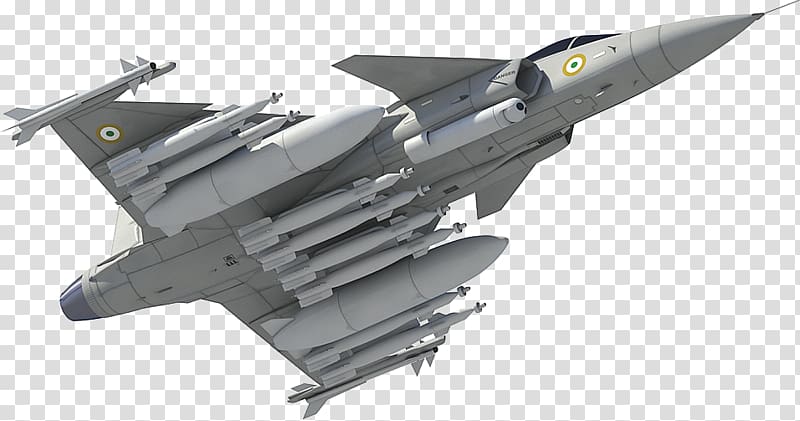
"mission mode" intensity. This spotlighted the Tejas Light Combat Aircraft
(LCA) Mk1A, whose timelines were extended by two years in February 2026.
Currently, just five Mk1A units are delivery-ready, with nine others pending
General Electric (GE) engines. The IAF has observed that HAL's commitments
to timelines and standards are sometimes not met, intensifying concerns over
fleet readiness.
These reflect HAL's wider hurdles, including an order backlog surpassing
₹2.7 lakh crore, institutional sluggishness, and R&D spending that
trails international benchmarks.
A Comparative Lens: HAL and AVIC in Focus
In aerospace and defence, HAL and AVIC embody their countries' ambitions
for self-sufficient military and civil aviation. While both advance national
goals, AVIC's swift rise and expansive footprint highlight differences
rooted in policy, funding, and heritage.
HAL has progressed from basic assembly to elements of indigenous creation
over the years, yet it grapples with critiques over its gradual path to
complete design independence. AVIC, established in 1951 and restructured in
2008 after earlier divisions, has optimised its structure to spark
innovation. Building on Soviet foundations, it has chased technology
transfers aggressively via joint ventures, morphing from replicating Russian
models to crafting sophisticated systems.
AVIC exemplifies "technological leapfrogging," commanding expertise in
hot-core engines, advanced avionics, and composites through intensive
R&D and acquisitions like Continental Motors (2010) and Cirrus (2011).
With over 30 aviation labs and alliances with Honeywell, GE, and Safran,
AVIC advanced from MiG derivatives to native fifth-generation tech in mere
decades, fuelled by substantial state support.
HAL, though engaged in similar partnerships (Su-30MKI, Jaguar), has been
seen as a "laggard" for viewing them primarily as production exercises
rather than absorption catalysts. It trails in engine development, depending
on GE F414 and Safran agreements, and contends with delays like those in
Tejas Mk1A. Encouragingly, HAL is adopting platform-based accountability as
advised by the Boston Consulting Group (BCG) and pursuing authentic tech
transfers for AMCA engines (100% IP via Safran). Nonetheless, bureaucratic
hurdles and contract dependency have somewhat sidelined it from leading
roles.
The Ripple Effects: Exclusion from the AMCA Spotlight
HAL's accumulated issues peaked with its de facto sidelining from the
AMCA's primary stewardship in February 2026.
The Basis for Disqualification
The Aeronautical Development Agency (ADA) highlighted HAL's outsized order
book—exceeding three times its yearly revenue—and a track record of timeline
slips as reasons it posed risks to this flagship endeavour. This mirrors the protracted 30-year Tejas journey, which ADA is keen to
sidestep.
Embracing Private Sector Dynamism
To hasten AMCA progress, the government has channelled the project into a
Special Purpose Vehicle (SPV) spearheaded by private entities. From seven
contenders, three consortia advanced: Tata Advanced Systems Limited (TASL),
Larsen & Toubro (L&T) alongside Bharat Electronics, and Bharat Forge
teamed with BEML and Data Patterns. These groups will oversee prototype
building and mass production, targeting the initial prototype in 3-4 years.
HAL retains a possible contributory position but steps back from the
helm.
This move underscores a policy tilt toward private agility, echoed in
recent online dialogues on platforms like X, which underscore HAL's delays
and the value of competitive edges.
Charting a Resilient Future: HAL's Transformative Steps
To navigate this shift, HAL is embracing essential changes, propelled by
both outside influences and internal resolve.
1. Platform-Based Accountability: Guided by BCG insights, HAL is
pivoting from regional setups to Platform Business Units by March 2026. This
empowers managers with direct responsibility for aircraft schedules,
fostering greater efficiency and punctuality.
2. Authentic Technology Adoption: New pacts prioritise meaningful
integration. The GE-F414 deal, with 80% technology transfer, will energise
Tejas Mk2 and early AMCA models, eyeing the first home-built engine by 2029.
Safran's collaboration on a 120 kN AMCA engine grants 100% IP rights and
complete transfer, enlisting private firms as oversight partners.
3. Evolving to a Key Supplier: HAL may transition from chief
integrator to a premier component provider for domestic alliances and
international leaders like Boeing and Airbus. This strategy plays to its
fabrication strengths while alleviating full-project oversight
demands.
Closing Thoughts
HAL is evolving beyond being the sole player in the field. The AMCA SPV's
emergence, alongside private innovators, signals the close of an era of
unchallenged state dominance. To thrive, HAL must demonstrate parity with
private-sector nimbleness, lest it settle into a subcontractor niche in the
sector it pioneered. As India advances self-reliance through Atmanirbhar
Bharat, this transition holds promise for sparking widespread
creativity—provided HAL seizes the moment for true reinvention. Meanwhile,
AVIC's expansive vision and ingenuity cement its status as a global
frontrunner, offering India valuable insights from China's proactive tech
integration model, even as HAL carves its path as an essential,
India-centric contributor.

No comments:
Post a Comment