Tuesday, 17 June 2025

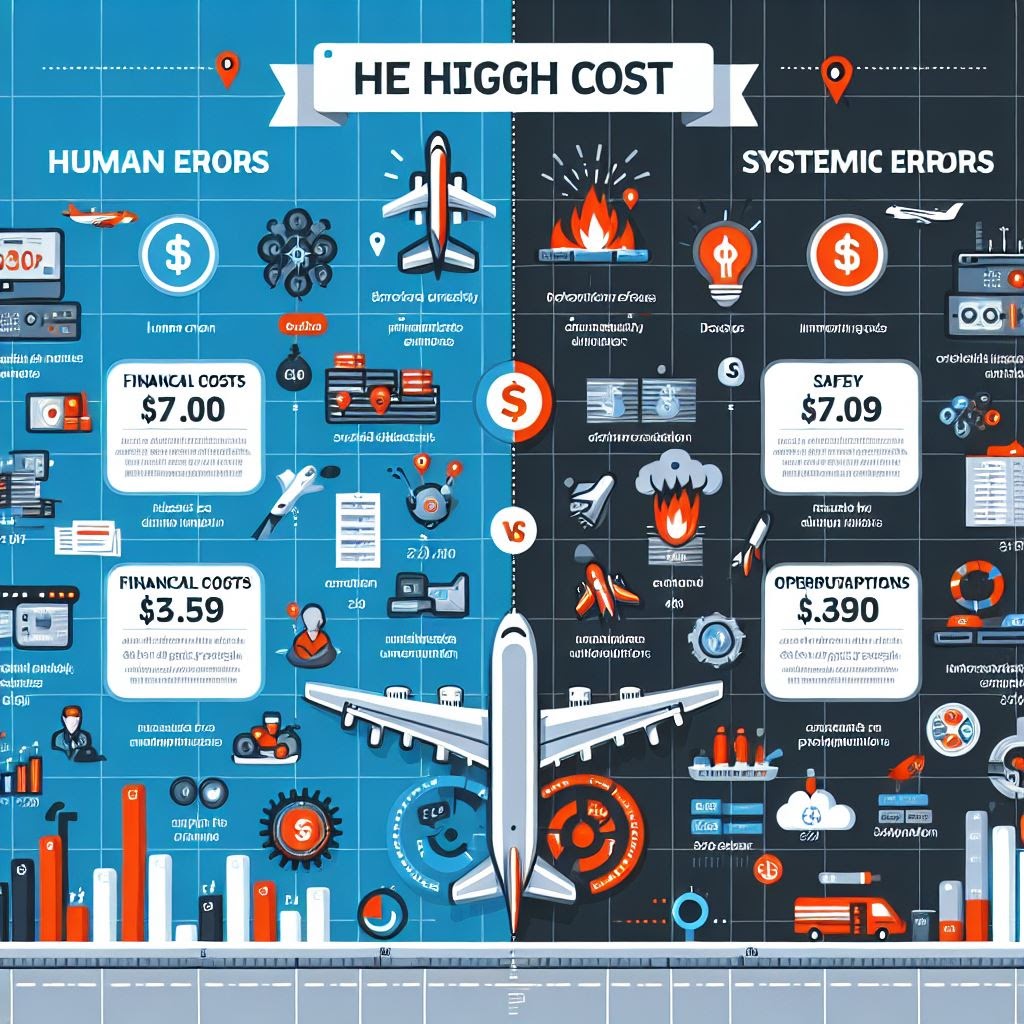
✈️ The High Cost of Human and Systemic Errors in Aviation

Introduction

In aviation, safety is never coincidental. It’s the product of engineering excellence, stringent regulation, procedural discipline, and a culture of relentless improvement. Despite these layers of defense, accidents still occur—and when they do, human error combined with systemic failure is often at the core.

While pilots operate with skill and professionalism, they are still human—subject to fatigue, distraction, and cognitive limitations. Meanwhile, the very systems designed to assist them—such as Flight Management Systems (FMS) and performance calculation software—are only as effective as the data they receive and the clarity of their design.

The aviation community has learned, sometimes tragically, that even small input errors can have catastrophic outcomes. The phrase “Garbage in, accident out” is not a clichΓ©—it’s an operational hazard.

Saturday, 14 June 2025

✈️ Take-off Distance Monitoring Systems (TDMS): Your Safety Co-Pilot on the Runway

 When a pilot pushes the throttles forward for take-off, there’s one big question in the background:

“Will I have enough runway to get airborne safely?”


In the high-stakes world of aviation, every inch of runway counts. Ensuring an aircraft can safely achieve takeoff speed and altitude without running out of pavement is paramount. 

That’s where Take-off Distance Monitoring Systems (TDMS) step in — acting like an intelligent, ever-vigilant co-pilot that keeps an eye on performance in real time. Whether it’s TAMS (Take-off Acceleration Monitoring System), TOS (Take-off Surveillance), or other advanced systems, their mission is simple but vital:


πŸ›‘ Warn the crew early if the aircraft isn't accelerating as expected, so there's still time to reject the takeoff safely.

Why Monitoring Take-off Distance is Absolutely Essential

The need for meticulous take-off distance monitoring stems from several critical factors:

1. Safety First, Always: At its core, monitoring ensures that there's always sufficient runway length for a safe and successful take-off. Without precise understanding and real-time validation, the risk of a dangerous runway overrun drastically increases.

2. Certification and Precision Engineering: Accurate measurements of take-off distances are not just for daily operations; they are fundamental to the entire aircraft development process. These measurements are essential during the rigorous certification of new aircraft types and are meticulously verified during production flight tests. This ensures that the aircraft performs exactly as designed under certified conditions.

3. Optimizing Performance in Every Condition: Understanding and accurately predicting take-off distances helps determine an aircraft's optimal performance across various runway surfaces (e.g., dry, wet, contaminated) and environmental conditions (e.g., temperature, altitude, wind). This data is crucial for flight planning and operational flexibility.

4. Learning from Real-World Experience (PIREPs): Pilot Reports (PIREPs) on actual take-off distances observed under non-standard conditions – such as a contaminated runway – are invaluable. This real-world feedback helps refine performance models, enhance pilot training, and update operational procedures, continually improving safety margins.

What Goes On Behind the Scenes: The Mechanics of Take-off Distance Monitoring


TDMS and TAMS are sophisticated systems that involve continuous real-time analysis:

· Precise Take-off Distance Calculation: Before the take-off roll even begins, advanced monitoring functions like Airbus's Take-off Surveillance (TOS) calculate the expected lift-off distance. This calculation is dynamic, based on a wealth of pre-entered performance data, including the aircraft's weight, engine thrust settings, flap configuration, and more. This forms the baseline for safe operation.

· Real-time Comparison to Available Runway: As the aircraft accelerates down the runway, the system continuously compares the calculated required distance with the actual available runway length. This dynamic comparison ensures that the take-off remains feasible within the physical constraints of the runway, preventing situations where the aircraft might require more runway than what's ahead.

· Enhanced Situational Awareness for Pilots: Take-off monitoring systems are designed to empower pilots with superior situational awareness. They provide critical "situation-advisory flags" (SAFs) or aural warnings. These alerts are invaluable in notifying pilots about potential issues, such as insufficient acceleration or an unexpected reduction in available runway length (e.g., due to an incorrect lineup).

· The Power of Take-off Acceleration Monitoring (TAMS): A key component of these systems is TAMS. This specific feature relentlessly monitors the aircraft's acceleration throughout the take-off roll. If the system detects any signs of insufficient acceleration – perhaps due to an engine issue, incorrect thrust setting, or even residual braking – it immediately alerts the flight crew. This early warning is crucial, as it allows pilots to make a timely and informed decision to reject the take-off if needed, before reaching a point of no return.

πŸ” How Does Take-off Distance Monitoring Work?

1. Before You Roll: Pre-Takeoff Setup

    • Data Entry: The crew loads up key inputs like aircraft weight, take-off speeds (V1, VR, V2), flap settings, thrust levels (like FLEX temp), runway length, and outside air temperature (OAT).
    • Performance Planning: Based on that info, the system calculates how much runway should be needed — and how quickly the aircraft should accelerate.
    • Configuration Check: Modern systems even ensure settings like flaps and trim match what was entered.

2. During the Roll: Real-Time Monitoring

As the aircraft starts rolling:

πŸ“‘ GPS/INS sensors track the position and acceleration.

πŸ›ž Wheel sensors monitor ground speed.

πŸ”§ Engine sensors verify thrust output.

The system constantly compares actual performance with expected values. If the aircraft isn’t accelerating fast enough, the crew is alerted — fast.

3. When Things Go Off Track: Warnings and Alerts

These systems don’t stay silent if something goes wrong.

They’ll call out:

πŸ”Š “Insufficient Acceleration”

πŸ”Š “Taxiway Takeoff”

πŸ”Š “Insufficient Runway Length”

Visual cues (like ECAM messages on Airbus) tell the crew what’s happening — and often suggest rejecting the takeoff if the conditions aren’t safe.

πŸ” A Look at the Systems in Action

System

Function

TAMS

Focuses on monitoring acceleration during the take-off roll. Simple, but life-saving.

TOS (Take-off Surveillance)

Verifies aircraft config, runway alignment, and lift-off distance vs runway length.

TOM (Take-off Monitoring)

Compares real-time acceleration with predicted values. If it’s off by more than 15% (e.g., at 90 knots), you’ll get a warning.

RAAS (Runway Awareness and Advisory System)

Adds location-based runway alerts. Warns about short runways, wrong runway entries, and provides “distance remaining” advisories.


✅ Why TDMS is a Game-Changer
🧠 Smarter Decision Making: Pilots get real-time feedback to make safer go/no-go decisions.
⚠️ Prevents Human Errors: Catches data entry mistakes or miscalculations before they become dangerous.
πŸ•’ Early Warnings: Gives precious seconds to act — especially during high-speed takeoff rolls.
πŸ“‰ Reduces Incidents: Helps prevent overruns, especially on contaminated or short runways.
🧰 Reduces Workload: The system handles the math so the pilots can focus on flying.
πŸ”§ Regulatory Push: Aviation authorities like EASA are backing TDMS as essential safety tech. 

The Future of Runway Safety

Take-off Distance Monitoring Systems represent a significant leap forward in aviation safety. By leveraging cutting-edge sensor technology, precise algorithms, and real-time data analysis, these systems provide an invaluable layer of protection against runway overruns. They empower pilots with critical information when every second counts, reinforcing that in aviation, safety is not just a priority – it's an absolute guarantee, meticulously maintained by technological innovation.

✈️ Final Thoughts: A Safety Net You Never Knew You Needed

  • TDMS isn’t just about numbers — it’s about giving the crew one last line of defense when things don’t go according to plan.
  • Whether it’s a subtle thrust anomaly, wrong runway lineup, or misjudged weight entry, these systems catch the error before it turns into an emergency.
  • In a world where precision and timing are everything, TDMS is the quiet guardian of every successful takeoff.

Author : GR Mohan

Understanding Declared Distances: The Backbone of Safe Takeoffs and Landings

When it comes to flight planning, a lot more goes into takeoffs and landings than meets the eye. Pilots and dispatchers rely on a series of precisely calculated runway distances—known as declared distances—to make sure aircraft can take off, land, or even abort a takeoff safely. These aren’t just numbers—they’re the foundation of flight safety.

✈️ What Are Declared Distances?

Declared distances define the maximum runway lengths available and suitable for aircraft performance, covering everything from normal takeoffs to rejected ones and landings. The four key types are:

TORA (Take-Off Run Available)

TODA (Take-Off Distance Available)

ASDA (Accelerate-Stop Distance Available)

LDA (Landing Distance Available)

Some airports may also have a Displaed Threshold, which is a threshold located at a certain point along the runway, not necessarily at the physical beginning, used to protect Obstacle Clearance.

Let’s break each one down.


1. TORA – Take-Off Run Available

TORA is the actual length of paved runway available for the aircraft’s ground roll—from brake release until liftoff. In other words, it is the length of runway declared available for the take-off run, from the threshold to the stopway or the end of the runway.

It’s the go-to number for pilots to determine whether there’s enough room to hit takeoff speed.

If TORA is short, it might restrict aircraft performance, limit payload, or require modified procedures.

Wet runway? Forget about using the clearway—the aircraft must lift off and reach 15 feet by the end of the runway itself.


2. TODA – Take-Off Distance Available

TODA includes TORA plus the clearway—an obstacle-free area beyond the runway.

This full stretch is factored in for the airborne portion of takeoff.

Useful when a pilot needs that extra space to get airborne and clear any obstacles safely.

Think of TODA as the runway plus a bit of a boost.

3. ASDA – Accelerate-Stop Distance Available

This one’s crucial for emergencies. ASDA is the length of runway (and possibly stopway) available to accelerate up to V1 (decision speed) and then safely abort the takeoff if needed.

It must account for aircraft weight, conditions, and available stopping power like reverse thrust or brakes.

At V1, the pilot must commit—either go or stop. ASDA gives the space to do the latter safely.

⚠️ Can ASDA Be Shorter Than TORA?

Yes, especially at airports in the U.S. Why? Sometimes, the area beyond the runway isn’t suitable as a stopway due to land use restrictions (like roads or buildings). That makes the ASDA shorter, even if the runway looks long enough.

Example: At Teterboro (KTEB), Runway 01 has a TORA of 7,000 feet—but the ASDA is only 6,090 feet due to land constraints. Charts may not always show this, which can mislead pilots if not accounted for in planning.

4. LDA – Landing Distance Available

LDA is the length from the runway threshold to the end of the runway that can be used for landing and stopping.

Landing performance is measured from a 50 ft threshold crossing to a full stop.

Pilots must ensure that the landing distance required (LDR) doesn’t exceed the LDA—especially in wet or slippery conditions.

Clearways vs. Stopways: Know the Difference

At many runways, you’ll find clearways and stopways extending beyond the runway. Though they might look similar, their purposes are quite different.

✅ Clearway

A clearway is a paved or unpaved, obstacle-free area beyond the runway, at the end of the declared take-off run, which can be used for acceleration during take-off. It must have a specified slope.

It's used only for continued takeoff, giving extra room after liftoff.

It doesn’t need to support the weight of an aircraft.

✅  Stopway

A stopway is a prepared surface aligned with the runway, used to support aircraft that abort a takeoff past V1. It is not suitable for take-off but helps in emergencies.

Must be as wide as the runway, strong enough to bear aircraft weight, and clearly marked with chevrons or lights.

Acts like a safety net in high-speed abort scenarios.

Some airports even feature EMAS (Engineered Materials Arresting Systems)—specially engineered surfaces designed to quickly decelerate aircraft that overrun the runway.

Balanced vs. Unbalanced Field Length

✈️ Balanced Field Length

Here, the accelerate-go and accelerate-stop distances are equal. The limiting factor becomes whichever is shortest among TORA, TODA, or ASDA.

Great for simplicity in performance planning.

If one distance is reduced—say, ASDA is shorter—the available field length for takeoff is automatically reduced too.

In this case, performance is split:

Accelerate-stop is compared only to ASDA

Accelerate-go is based on TORA + clearway

This lets the operator optimize performance based on specific conditions or aircraft configuration.

✍️ Final Thoughts

Whether you're preparing a takeoff roll at a major international hub or landing on a shorter regional strip, declared distances are the data backbone of your performance planning.

Understanding the roles of TORA, TODA, ASDA, and LDA, and the function of clearways and stopways, helps pilots make safe, informed decisions—especially during high-stakes moments like an abort or emergency.

Always check your airport charts, NOTAMs, and aircraft performance data carefully. Because in aviation, runway length isn’t just about how long it is—it’s about how usable.


Author : GR Mohan
Friday, 13 June 2025

Aviation Risk Management Overview


Aviation risk management is a crucial and structured approach to enhancing safety and optimizing operational efficiency within the aviation sector. This systematic process focuses on identifying, analyzing, and mitigating potential hazards, which helps to ensure that aviation operations are conducted safely and smoothly. Below is a detailed examination of the key aspects, importance, tools, methods, and processes involved in aviation risk management.

Key Aspects of Aviation Risk Management

Hazard Identification: 

  • Definition: This involves recognizing potential threats that could lead to accidents or incidents. Hazards can arise from various sources, including:
  • Human Error:  Mistakes made by pilots, air traffic controllers, and ground crew.
  • Equipment Malfunctions: Failures in aircraft systems or components.
  • Adverse Weather Conditions: Poor visibility, turbulence, and severe weather patterns that can impact flight safety.

Risk Assessment: 


Process:
Once hazards have been identified, the next step is to evaluate the likelihood and severity of each hazard. This involves:
  • Likelihood: Analyzing how probable it is that a specific hazard will result in an incident.
  • Severity: Assessing the potential consequences of an incident arising from the hazard, such as injuries, fatalities, or damage to property.
  • Output: The outcome is often a risk matrix that categorizes risks based on their likelihood and severity, helping prioritize actions.

Risk Mitigation: 


Implementation:
This phase focuses on developing and implementing strategies to reduce or eliminate identified risks. Common measures include:
  • Enhanced Safety Protocols: Establishing and enforcing stricter operational procedures.
  • Proactive Monitoring Systems: Utilizing technology to monitor systems and processes in real-time.
  • Predictive Analytics: Leveraging data analysis to foresee potential issues before they escalate.
  • Cyclical Process: 
  • Description: Risk management in aviation is a continuous cycle that involves:
  • Monitoring and evaluating current risks and the effectiveness of implemented strategies.
  • Adapting to new conditions, insights, and changing environments to maintain a high standard of safety.

Hierarchical Control Measures

  • Prioritization: To effectively manage risks, measures are prioritized as follows:
  • Elimination/Substitution: Eliminating the hazard entirely or substituting it with something less risky.
  • Isolation: Separating the hazard from people and assets.
  • Verification: Utilizing engineering or physical controls to mitigate risks.
  • Administration: Implementing organizational controls, policies, and procedures.
  • Training: Ensuring personnel are trained and competent in recognizing hazards and responding appropriately.

Importance of Safety Management Systems (SMS): 

  • Structured Framework: Aviation risk management forms a critical part of Safety Management Systems, which provide a comprehensive framework for managing safety risks in a systematic and organized manner. Key components of SMS include:

  • Policy formulation.
    • Safety risk management processes.
    • Assurance and promotion activities for continual improvement.

Why Aviation Risk Management Is Important


Ensuring Safety:
 
  • The primary goal is to protect lives, preventing accidents and minimizing the consequences of incidents, thereby safeguarding passengers, crew, and ground personnel.
  • Improving Operations: 
  • By effectively managing risks, organizations can minimize disruptions in operations and maximize efficiency in air travel.
  • Regulatory Compliance: 
  • Aviation is heavily regulated, and effective risk management helps organizations adhere to local and international regulations and standards set by bodies like the International Civil Aviation Organization (ICAO) and national aviation authorities.
  • Cost Reduction: 
  • Proactive risk management can lead to significant savings by reducing costs associated with incidents, accidents, damage repairs, legal liabilities, and insurance premiums.

Tools and Methods in Aviation Risk Management

  • Bowtie Analysis:  

A tool used to analyze the causes of hazards and their potential consequences. The "bowtie" diagram visually represents the risk management strategy.
  • Fishbone Diagrams: 

Also known as cause-and-effect diagrams, these tools help in identifying the root causes of specific problems or hazards in aviation operations.
  • Hazard Risk Register
  • A detailed document that captures identified hazards, associated risks, and the measures taken to mitigate them. It serves as an essential reference for managing risks effectively.
  • Aviation Safety Database: 
  • A centralized system for collecting, analyzing, and storing data related to safety incidents, which helps identify trends and areas for improvement in safety practices.
  • Aviation Leading Indicators: 
  • Metrics that monitor early warning signs of potential problems or failures within aviation systems. These indicators help predict future incidents before they occur.

Conclusion

In summary, aviation risk management is a vital process that enhances safety, supports smooth operations, and promotes regulatory compliance within the aviation industry. By systematically identifying hazards, assessing risks, and implementing appropriate mitigation strategies, aviation organizations can protect lives, optimize performance, and reduce costs associated with incidents. As the aviation industry evolves, the importance of continuous risk management and the integration of technological advancements will become even more critical in maintaining a safe and efficient air travel environment.

Author : GR Mohan

πŸ›« Aviation Instructor Competencies: A Professional Guide

 Introduction


Aviation instructors are pivotal in shaping safety, proficiency, and professionalism in aviation operations. Beyond technical mastery, they must embody instructional effectiveness, safety culture, and leadership. Instructor competencies, therefore, form the backbone of quality aviation training, particularly under Competency-Based Training and Assessment (CBTA) and Evidence-Based Training (EBT) frameworks adopted globally.

Thursday, 12 June 2025

Cockpit Control Confusion: An Invisible Threat in Routine Operations

 Introduction

Inadvertently using the wrong cockpit control is a subtle but significant risk in daily flight operations. It is a situation that can affect pilots of any experience level and aircraft type. Despite modern flight decks being highly ergonomic and system-resilient, errors such as selecting flaps instead of landing gear, or engaging the parking brake instead of starting an engine, can and do occur.

This article explores the phenomenon of cockpit control confusion, using a real-world case study to highlight key lessons. It also analyses the human factors involved, outlines contributing causes, and provides actionable prevention strategies to help mitigate such incidents.

Sunday, 8 June 2025

Understanding and Managing Cockpit Control Confusion in Operations

 As aviation professionals, we recognize that safety is not merely a procedural formality; it is fundamental to the integrity of our operations. Recently, I viewed an insightful video focused on Crew Resource Management (CRM), prompting reflection on the complexities often encountered in the cockpit, particularly concerning automation. This article aims to address how we can enhance safety by proactively confronting these challenges.

The Role of CRM in Aviation Safety

CRM serves as a cohesive force that binds flight crews in an environment where automation can lead to confusion. The essential principle here is that no one individual should assume the entire burden of decision-making alone. Engaging the entire crew in open and effective communication is critical for safely navigating both manual and automated processes.

Key CRM Strategies for Mitigating Cockpit Confusion

Communication: Speak Up and Be Heard!


Effective and assertive communication is vital during high-pressure situations. For instance, consider a scenario in which an aircraft is approaching its destination, and the captain inadvertently selects an incorrect altitude. If a junior crew member observes this but refrains from voicing their concern due to perceived hierarchical barriers, the resulting oversight could escalate into a serious issue. By fostering an environment that encourages open dialogue, such concerns can be swiftly addressed, mitigating potential confusion and enhancing overall safety.

Situational Awareness: Maintain Continuous Awareness (Always Be in the Know )


Situational awareness is paramount, particularly in the context of automation. If an autopilot unexpectedly disengages during a critical phase of flight, a lack of consistent information sharing may hinder the crew’s ability to regain control effectively. An illustrative example occurred when a crew encountered an unexpected autopilot disengagement just before landing; the captain, engaged in configuring the aircraft for approach, failed to communicate this critical event, leading to momentary disorientation and heightened stress levels in the cockpit. Emphasizing the importance of ongoing communication ensures that all crew members remain informed about the flight's status and any necessary operational adjustments.


Team Dynamics: Cultivate Trust and Collaboration

Trust is a fundamental element in effectively navigating the challenges posed by automation. For instance, during a busy operational phase, a crew member may mistakenly assume that thrust management is fully automated and neglect to monitor engine parameters. This could lead to an undesired aircraft configuration. By fostering a culture of trust and collaboration, crew members can rely on one another to manage shared responsibilities competently, especially when automation systems falter.

Leadership: Setting the Pace

Effective and strong leadership is crucial in times of cockpit confusion. A captain who acknowledges the complexities introduced by automation and actively invites input from all crew members creates an inclusive environment. For example, when adjusting for an unexpected weather change, a captain who actively invites input from crew members can unveil different perspectives on the evolving situation. This inclusive approach can prompt timely corrective actions when a crew member identifies unusual behavior within the automated systems, thereby preventing the escalation of potential issues. In contrast, a captain who solely relies on automated systems without encouraging crew participation may miss vital inputs that could prevent unwanted deviations from the intended flight path.

Addressing Challenges Related to Automation Mismanagement

Overreliance on Automation: 


A prevalent issue arises when crews become excessively reliant on systems such as autothrust, leading to a failure to monitor critical parameters like airspeed. For instance, an incident occurred in which a flight crew, overly reliant on autothrust, neglected airspeed control during a climb, resulting in an unexpected descent due to a stall warning activation. If manual adjustments become necessary, this disengagement can render recovery efforts more challenging.

Automation Bias and Automation Complacency

Automation bias refers to the tendency to trust and prioritize information provided by technology, such as an FMGS display, while disregarding manual information sources that may present conflicting data, even when these sources are accurate, like PFD/ND display information. Similarly, automation complacency is a related concept that describes the reduced monitoring of technology due to a diminished suspicion of errors and an increased confidence in its reliability.

Miscommunication During High-Workload Phases:


In scenarios where flight crews manage multiple automated systems, miscommunication can lead to operational chaos. For example, during an approach, if one pilot prepares to disengage the autopilot for landing while the other simultaneously focuses on programming the Flight Management Computer (FMC) for a go-around, the abrupt transition can complicate the landing sequence and elevate the risk of errors, such as misconfigured approach settings leading to unstable approaches.

Cultural Differences in Automation Interaction: 

In multicultural crews, divergent approaches to automation may lead to significant misunderstandings. A notable incident involved a crew member accustomed to a particular airline's automation philosophy misinterpreting standard procedures in a new operational environment, resulting in a failure to follow critical pre-landing checklist items. This exacerbated confusion during a crucial stage of flight and could have led to a hazardous situation.

Commitment to Continuous Improvement Through Training and Feedback

A noteworthy conclusion from the video is the critical need for ongoing CRM training. Engaging in real-world scenario simulations—particularly those involving automation mismanagement—can significantly enhance our preparedness. Regular crew debriefings provide invaluable opportunities to reflect on challenges experienced during flights and to collaboratively identify strategies for improving communication and situational awareness.

Conclusion

As we continue our careers in aviation, we must integrate CRM principles that specifically address the challenges posed by cockpit confusion and automation. By prioritizing clear communication, maintaining situational awareness, enhancing team dynamics, and promoting effective leadership, we can significantly improve safety outcomes in our operations. Let us collectively commit to these principles, aspiring to create safer skies for all. Remember, a unified cockpit is essential for successfully navigating the complexities associated with automation in our flight operations.


Author : GR Mohan

Safety Concerns on Airbus A320 Family: An Overview

Background The in-flight upset recently experienced by a JetBlue aircraft, followed by the  Emergency Airworthiness Directive (EAD) that led...