Tuesday, 23 September 2025

The Dark Side of In-Flight Wi-Fi: What Passengers Should Know

Introduction

In-flight Wi-Fi is a hallmark of modern air travel, transforming long flights into opportunities for productivity, communication, and entertainment. Yet this convenience belies significant hidden cybersecurity risks. Whether for business travellers relying on sensitive communications or travel enthusiasts seeking seamless connectivity, understanding the security landscape and employing prudent protections is crucial to safeguard data at 35,000 feet.

Hidden Flaws in In-Flight Wi-Fi

In-flight Wi-Fi faces  inherent challenges that open the door to vulnerabilities :

  1. Weak or Absent Encryption: Many airline Wi-Fi networks lack proper encryption protocols like WPA3, transmitting data in plaintext, making them susceptible to interception.
  2. Shared Network Vulnerabilities: Passengers connect to a common network segment, which allows malicious users to scan and attack exposed devices.
  3. Rogue Access Points (Evil Twins): Attackers clone airline network names to lure users onto faux hotspots, capturing login credentials and personal data.
  4. Limited Bandwidth and Reliability: Satellite and air-to-ground connections suffer from slow speeds and frequent packet loss, impacting security feature performance.
  5. Outdated Hardware & Misconfiguration: Default passwords and legacy firmware on aircraft routers increase susceptibility to unauthorized access.
  6. Opaque Pricing & Service Guarantees: Passengers pay for often spotty service with no compensation for outages or breaches.

Airlines tend to emphasize access, convenience, and speed over robust security measures, underscoring the importance of user vigilance above the clouds.

Attack Techniques Targeting In-Flight Wi-Fi

Attackers exploit the above flaws using sophisticated methods:

  1. Evil Twin Hotspots: Malicious actors create deceitful networks mimicking airline Wi-Fi, tricking devices into automatic connection or manual selection.
  2. Man-in-the-Middle Attacks: Unencrypted communications are intercepted and altered to harvest credentials or inject malware. On a plane, a hacker can set up a fake Wi-Fi hotspot that looks identical to the airline's. When you connect, thinking you're on the legitimate network, everything you send passes through their device first. They see everything. They can even modify the data before sending it on.
  3. Packet Sniffing: Tools silently capture data from the shared network, harvesting sensitive information like passwords and credit card numbers.
  4. Router Exploits: Default or weak credentials on in-flight routers allow attackers to gain footholds that jeopardize overall network integrity.
  5. Advanced Aircraft System Risks: Though rare, research shows potential threats to satellite communication that could provide attackers with deeper network access.

Case studies documented attacks deploying evil twins mid-flight to steal login credentials highlight these risks’ immediacy.

Data and Privacy Threats

Compounded by airline data logging for legal compliance, passenger information may be vulnerable to third-party access and entanglements with international privacy laws.

Passengers face risks including:

  • Theft of email and banking credentials
  • Exposure of personal communications and browsing habits
  • Financial data compromise
  • Possibility of malware infections and phishing via malicious redirects

Most in-flight Wi-Fi providers store your browsing data for months or even years. This information isn't just sitting idle in a database—it's being actively used and shared.

Here's what happens with your data:

  • Combined with your loyalty program details for enhanced profiles
  • Sold to marketing partners for targeted advertising
  • Shared with travel industry partners (hotels, car rentals, etc.)
  • Used to develop "passenger personas" for future marketing
  • Sometimes handed over to authorities without warrants in certain jurisdictions

The scariest part? Many airlines operate under a patchwork of privacy regulations that vary depending on the country you're flying over. That means your data protection literally changes mid-flight.

Safeguarding Connectivity with VPNs

Virtual Private Networks (VPNs) offer robust defences against these threats by encrypting data and masking IP addresses. Effective VPN use involves:

1. Choosing a Reliable Provider: opt for services with AES-256 encryption, no-logs policies, and extensive global server networks.

2. Pre-Flight Setup: Install and test VPN apps on all devices before air travel.

3. Connect and Authenticate to Official Airline Wi-Fi: Complete portal logins or payments on authenticated networks.

4. Activate VPN Immediately: Encrypt all traffic by establishing a VPN connection before accessing websites or apps.

5. Enable Kill Switch and Leak Protection: Prevent accidental data exposure if VPN drops or DNS leaks occur.

6. Avoid Sensitive Access Without VPN: Never enter credentials for banking or corporate systems without VPN protection.

These practices effectively reduce attackers’ opportunities to intercept in-flight data.

Confirming VPN Efficacy with DNS Leak Tests

To verify VPN protection:

  • Test Without VPN: Connect to in-flight Wi-Fi, visit sites like dnsleaktest.com to record DNS info.
  • Test With VPN: Activate VPN, repeat tests, ensuring DNS servers belong to VPN provider only.
  • Mitigate Leaks: Adjust VPN settings or switch servers if ISP or airline DNS is visible.
  • Re-Test Periodically: Especially after reconnections or server switches.

Continuous DNS leak monitoring preserves private in-flight browsing.

Further Precautions

Additional security hygiene :

  • Disable file sharing and device discovery before connecting.
  • Avoid downloading software and OS updates over in-flight Wi-Fi.
  • Forget the in-flight network after the flight ends.
  • Stay alert for suspicious networks or login attempt prompts.
  • Keep system and app software updated.

These habits serve as layers of defence, complementing VPN use for safer in-flight internet.

Health and Social Implications

  • The extended screen time impact on circadian rhythms

Ever noticed how difficult it is to sleep after a long flight? It's not just the jet lag. That in-flight Wi-Fi keeping you glued to your screen is messing with your body clock big time.

Your brain gets confused when you're bombarding it with blue light from screens during times it expects darkness. On a night flight, your body should be preparing for sleep, but instead, you're watching movies, answering emails, or scrolling social media.

What happens next isn't pretty. Your melatonin production gets suppressed, making it harder to fall asleep when you finally want to. Many passengers step off planes feeling even more exhausted than expected because they've essentially been fighting their natural sleep cycles the entire journey.

  • Digital detox benefits you're missing during flights

Flying used to offer a rare break from the constant pings and notifications of everyday life. Now we've killed one of the last connectivity-free zones on earth.

A flight without Wi-Fi can be transformative. Passengers who unplug report:

  • Finishing books they've been meaning to read for months
  • Having actual conversations with seatmates (some leading to business opportunities or friendships)
  • Deeper, more refreshing sleep
  • Creative breakthroughs while staring out the window
  • Lower anxiety levels upon arrival

That feeling of dread when you hear "no Wi-Fi available on this flight" might actually be the beginning of something wonderful: a few precious hours when nobody expects anything from you.

Balancing Connectivity and Security for Business and Leisure Travelers

For business travellers and travel enthusiasts alike, in-flight Wi-Fi is indispensable. Yet threats demand a balanced approach combining convenience with protective measures:

  • Use VPNs consistently to encrypt sensitive communications.
  • Verify network authenticity before connecting.
  • Restrict sensitive tasks or financial transactions to VPN-secured sessions.
  • Employ multi-factor authentication where possible.
  • Carry portable hotspots if alternative connectivity is critical.
  • Stay informed about emerging in-flight network threats and advisories. 
  • Always log out of accounts when finished and clear your browser history before disconnecting.

Balancing utility with precautions empowers secure productivity and peace of mind in the sky.

Conclusion

In-flight Wi-Fi, while a transformative amenity, is fraught with cybersecurity hazards stemming from technical limitations, network vulnerabilities, and attacker ingenuity. Passengers expose sensitive data without robust safeguards like VPNs and vigilant network behaviour. Complemented by proactive user practices and elevated airline security standards, safer in-flight connectivity is achievable.

With increasing travel demand and burgeoning onboard digital services, awareness and preparation remain the best tools to harness in-flight internet safely and securely.


Author: G R Mohan
Friday, 5 September 2025

Urban Air Mobility: Challenges and Emerging Solutions

 Introduction

Urban Air Mobility (UAM) is set to redefine transportation in urban environments by introducing faster and more flexible options for passenger and cargo transport through the air. With projections estimating approximately 3,000 passenger drones in operation by 2025, UAM is rapidly gaining traction. However, integrating these innovative aircraft into existing airspace systems poses significant challenges. This document dwells on contemporary research and developments as of September 2025, drawing from recent reports, regulatory updates, and industry insights. It explores the complexities of UAM implementation and highlights emerging solutions to ensure its safe and efficient integration into urban landscapes.

Overview

Urban Air Mobility encompasses a range of aerial vehicles, including unmanned drones and passenger aircraft, designed to operate within city environments. These systems aim to alleviate ground congestion and reduce travel times. However, their integration into urban airspace requires addressing critical issues such as congestion, infrastructure limitations, regulatory gaps, safety concerns, and technological barriers. Recent forecasts, such as Eve Air Mobility's 20-year outlook from June 2025, predict substantial growth in the UAM sector, emphasizing the need for scalable solutions to meet global demand.

Key Challenges

· Airspace Congestion: The introduction of numerous UAM vehicles increases the risk of collisions and complicates air traffic management. Current air traffic control systems, designed for traditional manned aircraft, are not equipped to handle the high density and diversity of UAM operations. As of 2025, studies highlight that the surge in eVTOL (electric Vertical Take-Off and Landing) aircraft exacerbates this issue, with projections indicating a market exceeding USD 30 billion by 2030 in regions like India due to urbanization and congestion. Multi-Criteria Decision-Making frameworks are being used to prioritize barriers in countries like Germany and the USA.

· Infrastructure Readiness: Most cities lack dedicated facilities like vertiports or airspace corridors to support frequent UAM take-offs and landings, limiting scalability and raising safety concerns. Contemporary reports note the unavailability of landing sites as a key hurdle, with companies like Honeywell emphasizing the role of vertiports in reducing urban pollution and congestion. Pilot programs in cities like Singapore and Dubai are underway, but global infrastructure upgrades remain critical.

· Regulatory Gaps: Existing aviation regulations are outdated or too broad to address the specific needs of UAM, creating uncertainty for operators and challenges in ensuring safety. EASA's frameworks, updated through 2023 with special conditions for VTOL aircraft and U-Space regulations, are progressing, but 2025 evaluations indicate ongoing hurdles in certification and operations. International efforts are gaining momentum, with the UAE announcing dedicated air corridors in early 2025.

· Safety Concerns: Operating in dense urban areas requires advanced navigation and collision avoidance systems to prevent accidents, particularly in areas with high pedestrian activity and complex structures. Recent analyses point to battery performance, autonomous system reliability, and noise pollution as persistent issues. Joby Aviation's 2025 acoustic study shows eVTOL noise footprints 99% smaller than helicopters, addressing public acceptance barriers.

· Technological Limitations: Reliable communication systems and precise GPS navigation are essential but challenging in urban environments, where signal interference in "urban canyons" can disrupt operations. Advancements in electrification and automation are helping, but challenges like vibration in eVTOL designs (e.g., lift+ cruise configurations) and the need for full-scale testing persist, as discussed in aeromechanics research from July 2025.

Emerging Solutions

· Advanced Traffic Management Systems: AI-driven systems that leverage real-time data are being developed to monitor aircraft locations, predict traffic patterns, and enable collision avoidance, creating a digital air traffic control system tailored for urban skies. NASA's Unmanned Aircraft System Traffic Management (UTM) is being adapted for UAM, with recent integrations focusing on low-altitude drone traffic.

· Regulatory and Standardization Efforts: International organizations and governments are collaborating to establish comprehensive safety standards, certification processes, and operational guidelines to support UAM growth while prioritizing public safety. EASA's initiatives, including the U-Space package applicable from 2023, and FAA's frameworks are evolving, with 2025 progress including certification applications from European manufacturers. The UAE's air corridors exemplify multilateral cooperation.

· Dedicated UAM Corridors: Designated airspace zones for UAM vehicles help reduce congestion, simplify navigation, and enhance safety by providing predictable routes. Recent announcements, such as those in the UAE, aim to facilitate electric air transportation across cities.

· Electrification and Automation: Automated, connected vehicles equipped with GPS, 5G communication, and collision avoidance systems enable precise and reliable operations in complex urban environments. Companies like EHang are introducing eVTOLs in the UAE to reduce emissions, while innovations like shape-shifting wings (e.g., Jet Zero’s Blended Wing Body) promise fuel efficiency and lower noise.

· Infrastructure Development: The creation of vertiports, landing zones, and control facilities is critical to supporting UAM operations and integrating them into urban landscapes. Partnerships, such as those between Joby Aviation, Volocopter, and cities like Dubai, are advancing vertiport designs, with a focus on sustainable infrastructure.

· Collaborative Efforts: Partnerships among governments, technology companies, and industry stakeholders are essential to develop cohesive regulations, share innovations, and build public trust in UAM. Examples include Cyient's partnership with SkyDrive for eVTOL solutions and Archer Aviation's involvement in UAE initiatives. Thought leadership studies from EIT Urban Mobility and others emphasize cutting-edge solutions for urban challenges.

Background Information

Urban Air Mobility is an emerging field driven by advancements in drone technology, electric propulsion, and automation. It aims to complement existing transportation systems by offering aerial solutions for short-range travel and logistics. The projected growth of 3,000 passenger drones by 2025 underscores the urgency of addressing integration challenges to ensure scalability and safety. As of 2025, the sector is led by companies like Vertical Aerospace, Archer Aviation, and Eve, focusing on zero-emission aircraft and integrated ecosystems despite infrastructure and regulatory hurdles.

Examples and Evidence

Category

Example

Source/Details

Market Projections

eVTOL market in India is projected to exceed USD 30 billion by 2030.

Urban Air Mobility Expo post (Dec 2024).

Technological Innovation

Joby Aviation's eVTOL with 99% smaller noise footprint.

Avfoil News post (Sep 2025).

Regulatory Progress

EASA's Special Conditions for VTOL (2019-2023), U-Space regulations.

EASA website summary.

Infrastructure Projects

Vertiport developments in Singapore and Dubai by Joby and Volocopter.

Various reports (2025).

Collaborative Initiatives

UAE air corridors announced by GCAA, involving Archer Aviation.

Nikhil Goel post (Feb 2025).

Safety Advancements

Acoustic breakthroughs and vibration management in eVTOL designs.

Tsung Xu post (Jul 2025).

UAM In the Indian Context

India’s growing megacities face acute congestion, environmental challenges, and limited high-speed ground transport options. Urban Air Mobility (UAM) presents a transformative opportunity to redefine urban connectivity by leveraging electric Vertical Take-Off and Landing (eVTOL) aircraft and related technologies. With the growing Urban road traffic congestion,  India needs to review the introduction of UAM concepts  and address  current policies, anticipated regulations, initiate city-specific pilot programs, review  infrastructure requirements, and strategies for a phased adoption of this technology.

Urban centres in India are struggling with congestion, air pollution, and delays in surface transportation. Traditional infrastructure expansion alone cannot meet the future mobility demand. UAM provides a faster, cleaner, and scalable solution.

· Context: Cities like Delhi, Mumbai, and Bengaluru rank among the most congested globally. Commuters often spend 2–3 hours daily in transit.

· Rationale for UAM: Airport-city shuttles, intercity links, medical logistics, and emergency services provide immediate high-value applications.

· Government Priorities: UAM aligns with Make in India, Atmanirbhar Bharat, and National Electric Mobility Mission, reinforcing India’s focus on clean technologies, domestic aerospace capacity, and carbon emission reduction.

Conclusion

Urban Air Mobility has the potential to transform urban transportation by reducing ground congestion and enabling faster travel. However, its success hinges on overcoming challenges related to airspace management, infrastructure, regulation, safety, and technology. Through innovative solutions like advanced traffic systems, dedicated corridors, regulatory frameworks, and collaborative efforts, the industry is paving the way for a safe and sustainable urban aerial ecosystem. By 2025, with pilot programs, acoustic advancements, and international partnerships accelerating progress, UAM could soon transform city skies into vibrant highways of innovation and mobility. Further investment in research and public acceptance will be key to realizing this vision.

References

· Web sources from search results on "urban air mobility challenges and solutions 2025."

· EASA regulatory summaries.

· X posts on recent UAM developments.

Author: GR Mohan

Tuesday, 2 September 2025

Virtual Reality in Flight Training - Contemporary Advancements as of 2025


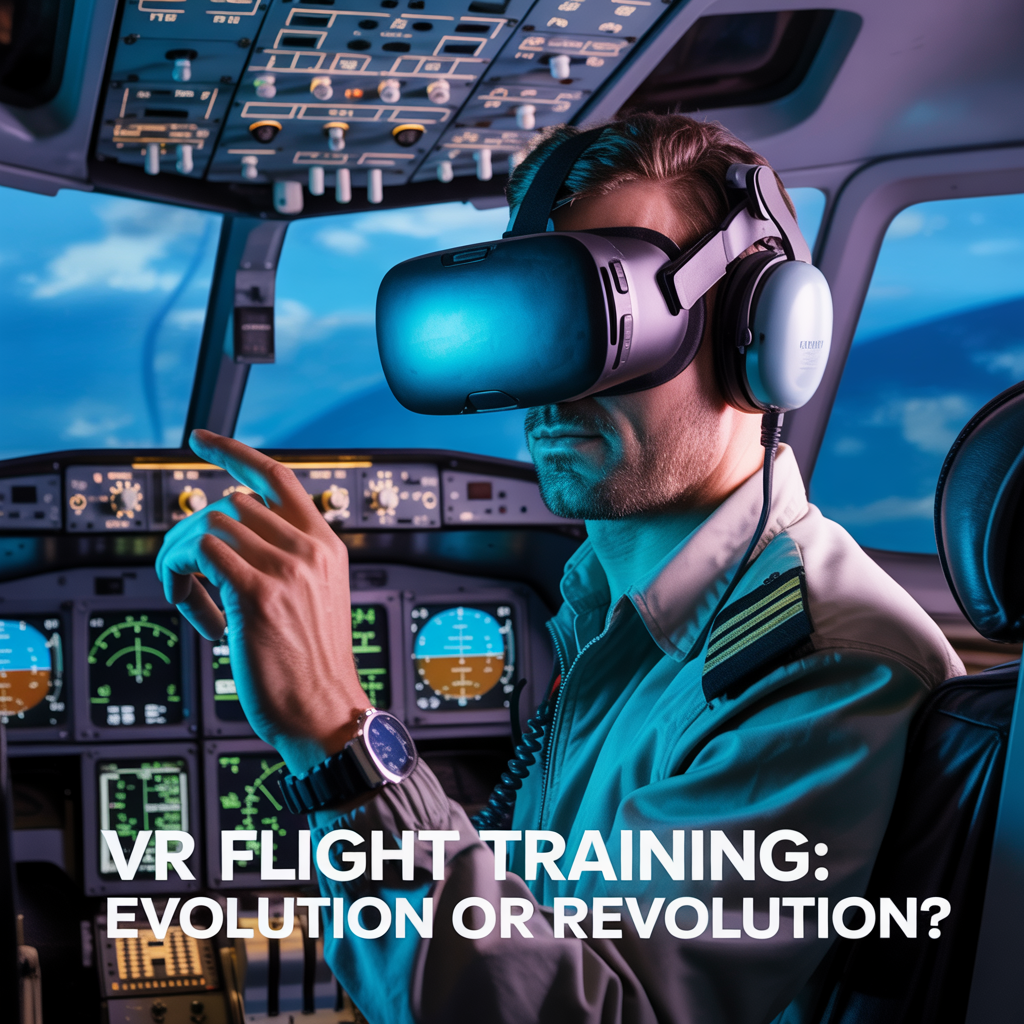
Create a realistic image of a focused male pilot wearing a modern VR headset in a cockpit environment, with one hand interacting with virtual flight controls while actual cockpit instruments are visible in the background, creating a blend of traditional and virtual reality training elements, with soft blue lighting highlighting the technology contrast, and the text "VR Flight Training: Evolution or Revolution?" subtly integrated.

Introduction

The aviation industry is undergoing a transformative shift, with Virtual Reality (VR) emerging as a cornerstone technology for enhancing flight training efficiency, safety, and accessibility. This analysis builds on prior discussions, providing a comprehensive exploration of VR’s integration in flight training, with a focus on advancements through 2024 and 2025. It incorporates detailed references to industry reports, academic studies, and real-world implementations to substantiate claims, while addressing challenges and future directions.

The Evolution of Flight Training

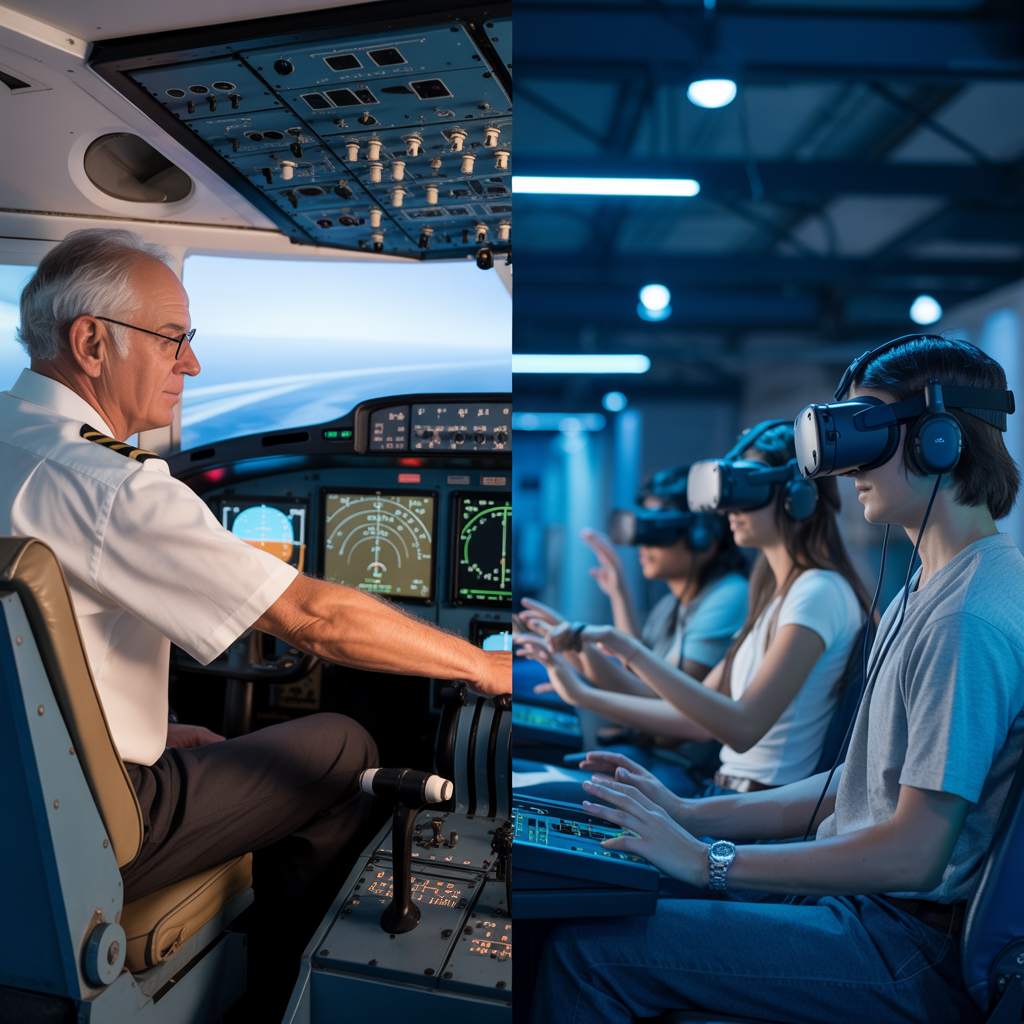
Create a realistic image of a split-screen view showing the evolution of flight training - on one side, a traditional cockpit simulator with analog instruments and an older white male instructor guiding a young pilot, and on the other side, a modern VR training setup with a diverse group of student pilots wearing VR headsets interacting with digital flight controls, with both scenes bathed in professional blue lighting suggesting technological advancement.

Traditional flight simulators: History and limitations

Flight simulators have been around since 1929, when Edwin Link built the first "Link Trainer." Back then, pilots sat in a metal box that pitched and rolled while they practiced instrument flying. Pretty basic stuff compared to today's tech.

By the 1960s and 70s, simulators got fancier with hydraulic motion systems and basic visual displays. The military and commercial airlines loved them because crashing in a simulator beats crashing in real life. Every. Single. Time.

But traditional simulators have their hangups. They're massive, expensive beasts. We're talking millions of dollars for a full-motion Level D simulator. Airlines need dedicated buildings just to house these things!

And despite their cost, they still don't nail the immersion factor. The visuals are often projected on screens with a limited field of view. You can see the edges of the screen, which instantly breaks the "I'm really flying" feeling that builds muscle memory.

Evolution and Core Principles of VR in Flight Training

VR leverages head-mounted displays (HMDs), motion tracking, and interactive controls to create immersive 3D environments that replicate aircraft cockpits and flight scenarios. Unlike traditional training methods—classroom instruction, fixed-base simulators, and live flights—VR offers cost-effective, risk-free, and repeatable training. Its core strengths include:

  • Immersion and Realism: High-fidelity graphics, haptic feedback, and spatial audio simulate real-world physics, weather conditions, and emergency scenarios.

  • Adaptability: Customizable modules for diverse aircraft, from commercial jets to electric Vertical Take-Off and Landing (eVTOL) vehicles.

  • Data-Driven Feedback: Integration with artificial intelligence (AI) enables real-time performance analysis and personalized training.

By 2025, VR will have evolved from a supplementary tool to a core component of aviation training, driven by post-pandemic demands for scalable, remote-capable solutions and the global pilot shortage, as noted in the International Air Transport Association’s (IATA) 2024 report on workforce challenges.

Key differences between conventional and VR training

Feature Traditional Simulators VR Training
Cost $5-15 million $5,000-50,000
Portability Requires a dedicated facility Can fit in a suitcase
Field of view Limited (typically 180°) Full 360° immersion
Haptic feedback Excellent (real switches) Limited or requires add-ons
Motion Full 6 degrees of freedom Usually stationary

Traditional simulators win on tactile feedback - nothing beats flipping actual switches. They're also still the gold standard for airline certification training.

VR shines in spatial awareness training. Want to practice looking over your shoulder during landing? Traditional Sims can't touch VR's ability to let you naturally turn your head and see everything around you.

The biggest game-changer? Accessibility. A flight school can now outfit multiple training stations for the price of one conventional simulator. This democratizes training that was once reserved for the big players with deep pockets.

How VR Training Works for Pilots

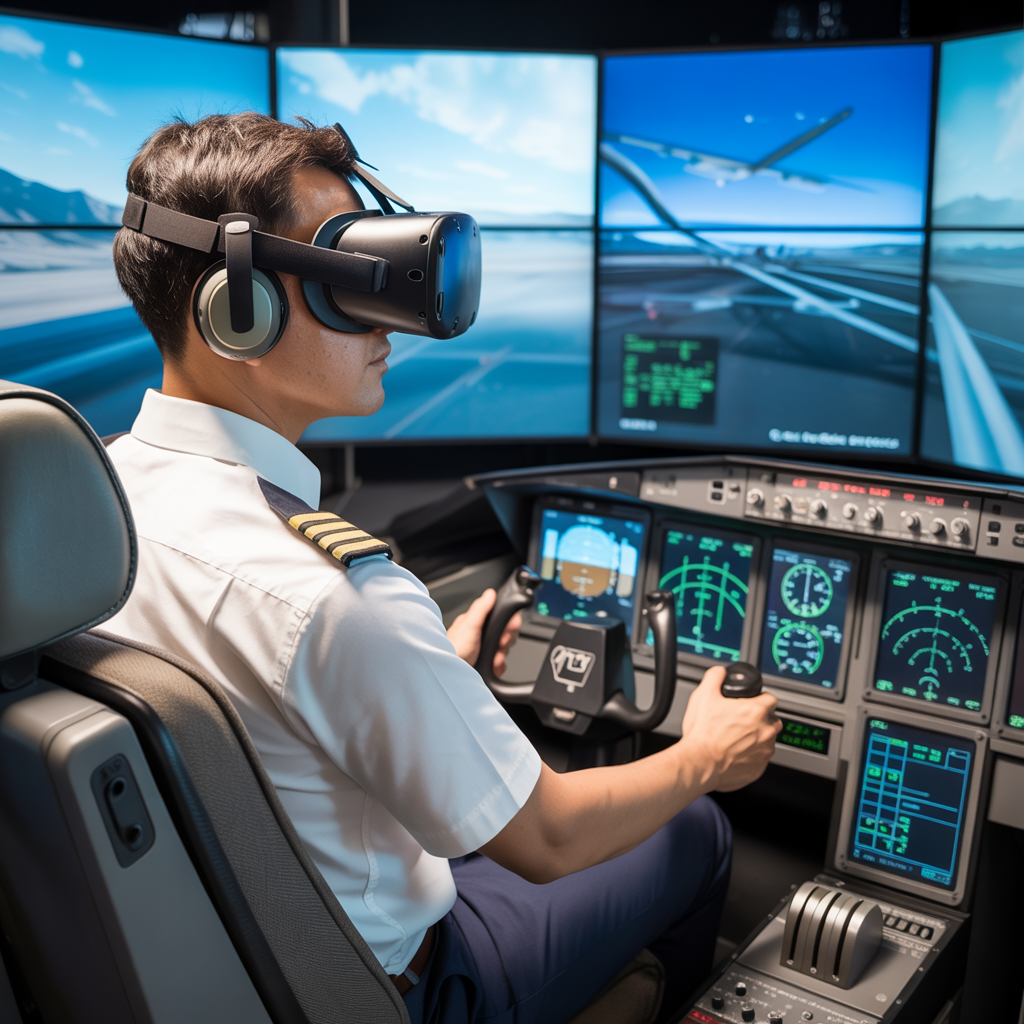
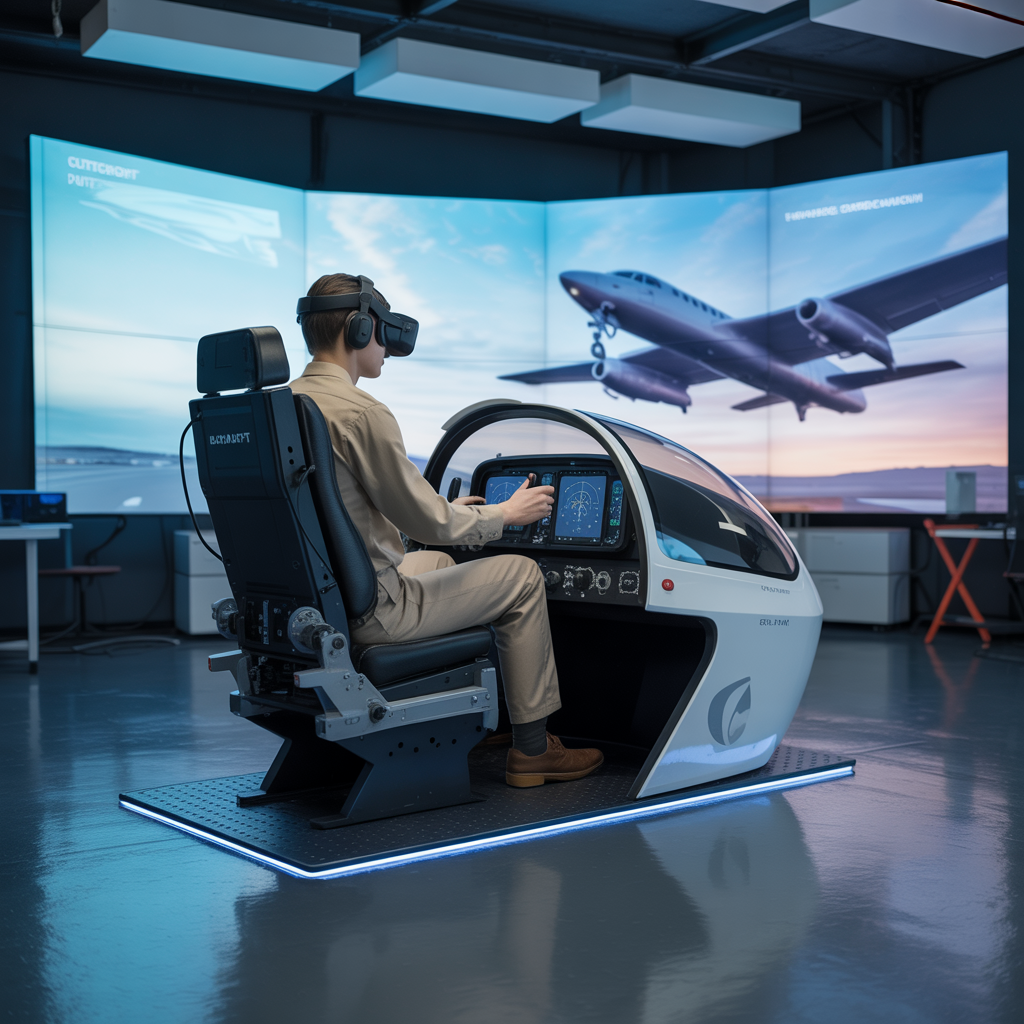
Create a realistic image of a professional male Asian pilot wearing a VR headset while seated in a realistic flight simulator cockpit, with his hands on the controls and multiple screens displaying flight data, technical diagrams, and simulator metrics around him, showing how virtual reality integrates with traditional pilot training methods.

Hardware components in modern VR flight training

Ever tried on a VR headset and felt like you were somewhere else? That's exactly what pilots-in-training experience, but way more sophisticated.

Modern VR flight training systems aren't just fancy gaming setups. They're complex arrangements of cutting-edge tech that make pilots sweat as if they're 30,000 feet up.

The core components include:

  • High-resolution VR headsets with wide fields of view (typically 110° or more)

  • Haptic feedback controls that simulate the actual resistance and vibration of flight controls

  • Motion platforms that pitch, roll, and yaw to match aircraft movements

  • Spatial audio systems recreating cockpit sounds from every direction

  • Eye-tracking technology to analyze pilot attention patterns

The difference between consumer VR and flight training VR? Night and day. While your home VR might run at 90Hz, pilot systems push 120Hz or higher to eliminate motion sickness during complex maneuvers.

Software capabilities and realistic scenarios

The hardware is impressive, but the software? That's where the magic happens.

Today's VR flight training software doesn't just show pretty clouds. It models entire flight physics systems down to how air density affects lift at different altitudes.

Pilots train in scenarios like:

  • Engine failures during critical flight phases

  • Sudden weather changes, including microbursts and wind shear

  • Instrument malfunctions requiring immediate troubleshooting

  • Air traffic control emergencies and diverts

  • Low-visibility approaches to unfamiliar airports

The realism is uncanny. These systems model everything from the way sunlight glares across instruments to how runway lights appear through fog at specific airports worldwide.

Integration with existing flight simulation systems

VR training doesn't exist in isolation. It's becoming the connective tissue between different training platforms.

Most major airlines and flight schools now link their VR systems with:

  • Full-motion Level D simulators (the FAA's highest certification)

  • Procedure trainers for specific aircraft types

  • Classroom management systems track student progress

  • Actual aircraft data systems for perfect replication

This integration enables a pilot to practice an emergency procedure in VR, then seamlessly transition to a full simulator with the exact same scenario configuration. The muscle memory transfers directly.

Data collection and performance tracking

The quiet revolution in VR training? It's all about the data.

Every eye movement, control input, and decision is tracked, creating a digital footprint of pilot performance that was previously impossible to capture.

Training programs now analyze:

  • Scan patterns across instruments during critical phases

  • Response times to emergency situations

  • Decision-making processes during complex scenarios

  • Consistency of control inputs under stress

  • Communication effectiveness during crew scenarios

This wealth of data lets instructors pinpoint exactly where a pilot needs improvement. Not just vague feedback like "work on your landings," but specific insights like "you're focusing too long on airspeed during final approach while neglecting descent rate."

The result? Pilots train more efficiently, focusing precisely on their weak spots rather than endlessly repeating procedures they've already mastered.

Proven Benefits of VR Pilot Training

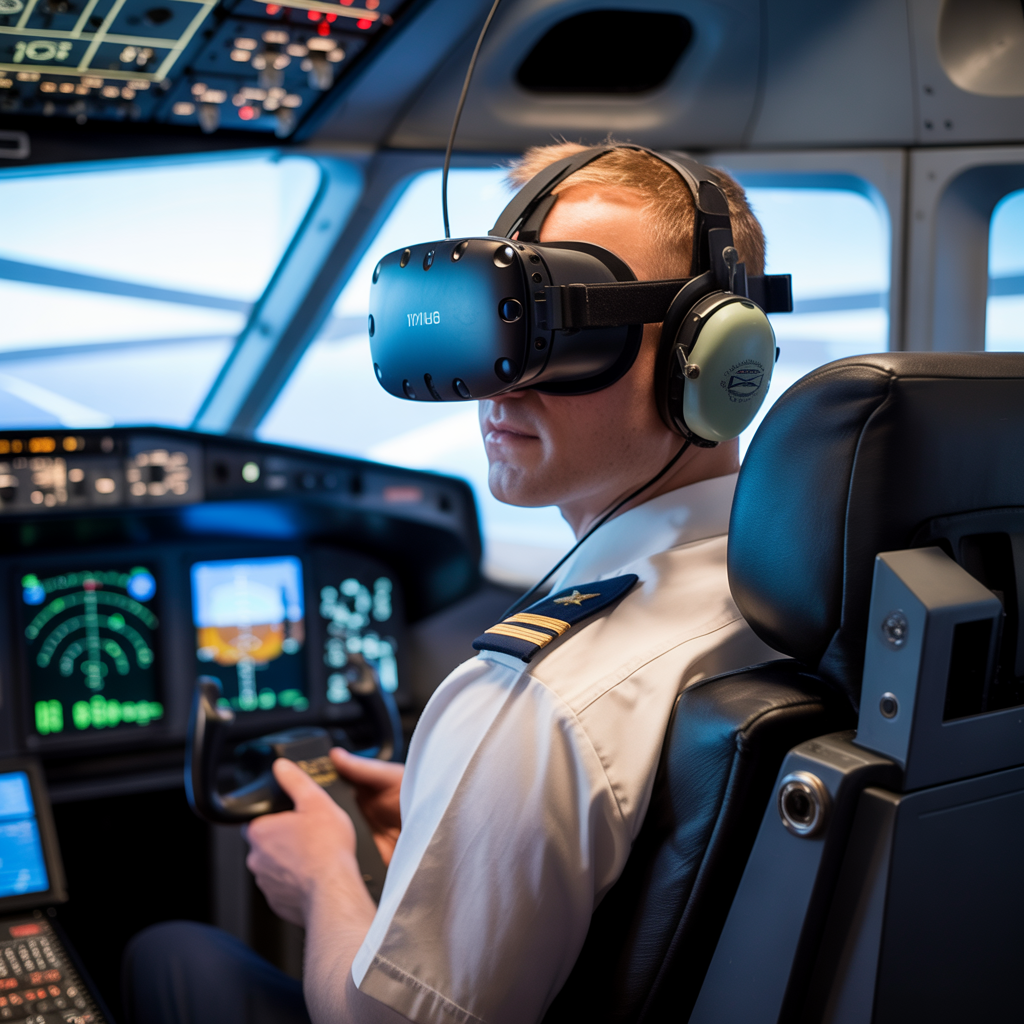
Create a realistic image of a professional-looking white male pilot in uniform wearing a VR headset while seated in a flight simulator cockpit with multiple screens displaying flight data, showing the intersection of traditional training and modern VR technology, with subtle lighting highlighting the sophisticated equipment and a focused expression on the pilot's face as he navigates a virtual training scenario.

A. Cost reduction compared to traditional methods

Flight training is expensive. Like, jaw-droppingly expensive. Traditional pilot training can cost anywhere from $60,000 to $150,000, and that's before you even talk about jet-specific training.

VR slashes these costs dramatically. Airlines using VR simulators report 60-70% savings compared to conventional flight simulators. Why? No massive hydraulic systems to maintain. No dedicated buildings to house them. No specialized technicians on standby 24/7.

A full-motion flight simulator costs millions and incurs operating costs of over $ 1,000 per hour. A VR setup? Maybe $5,000-$20,000 upfront with minimal running costs.

B. Enhanced emergency scenario practice

You can't practice engine failures or cabin fires in real planes (obviously). But in VR? Bring on the chaos.

Pilots can experience rare but critical scenarios repeatedly without risk. Sudden decompression at 35,000 feet? Electrical failure over water? Simultaneous engine failures? VR makes these scenarios visceral in ways desktop simulators simply can't match.

The immersion factor is huge here. Your brain processes VR experiences as nearly real, creating muscle memory and emotional responses that transfer to actual cockpits.

C. Accelerated learning curves

The data doesn't lie. Pilots using VR training reach proficiency 40% faster than those using traditional methods alone.

Why? Cognitive science tells us that immersive, multi-sensory learning sticks better. VR engages more of your brain than reading manuals or watching videos ever could.

Plus, there's the motivation factor. Pilots actually want to practice in VR environments. The gamification elements—scores, progression tracking, and realistic feedback—tap into natural competitive instincts.

D. Unlimited repetition without resource constraints

Practice makes perfect, but traditional training methods limit repetitions.

In VR, pilots can practice the same landing approach 50 times in a row if needed. They can run through the same emergency checklist until it becomes second nature. All without burning fuel, monopolizing instructor time, or hogging simulator slots.

This unlimited access transforms how pilots approach difficult procedures. Something not clicking? Just run it again. And again. And again—until it does.

E. Decreased environmental impact

Flight training burns a lot of fuel. A LOT of fuel.

A single training hour in a small Cessna burns around 8 gallons of aviation fuel. Scale that up to thousands of pilots doing thousands of training hours annually.

VR training cuts this carbon footprint dramatically. No fuel burned. No emissions. Just electricity to power the computers and headsets.

Some flight schools report carbon footprint reductions of 70%+ after implementing VR training programs. That's not just good for PR—it's genuinely better for the planet.

Challenges and Mitigation Strategies

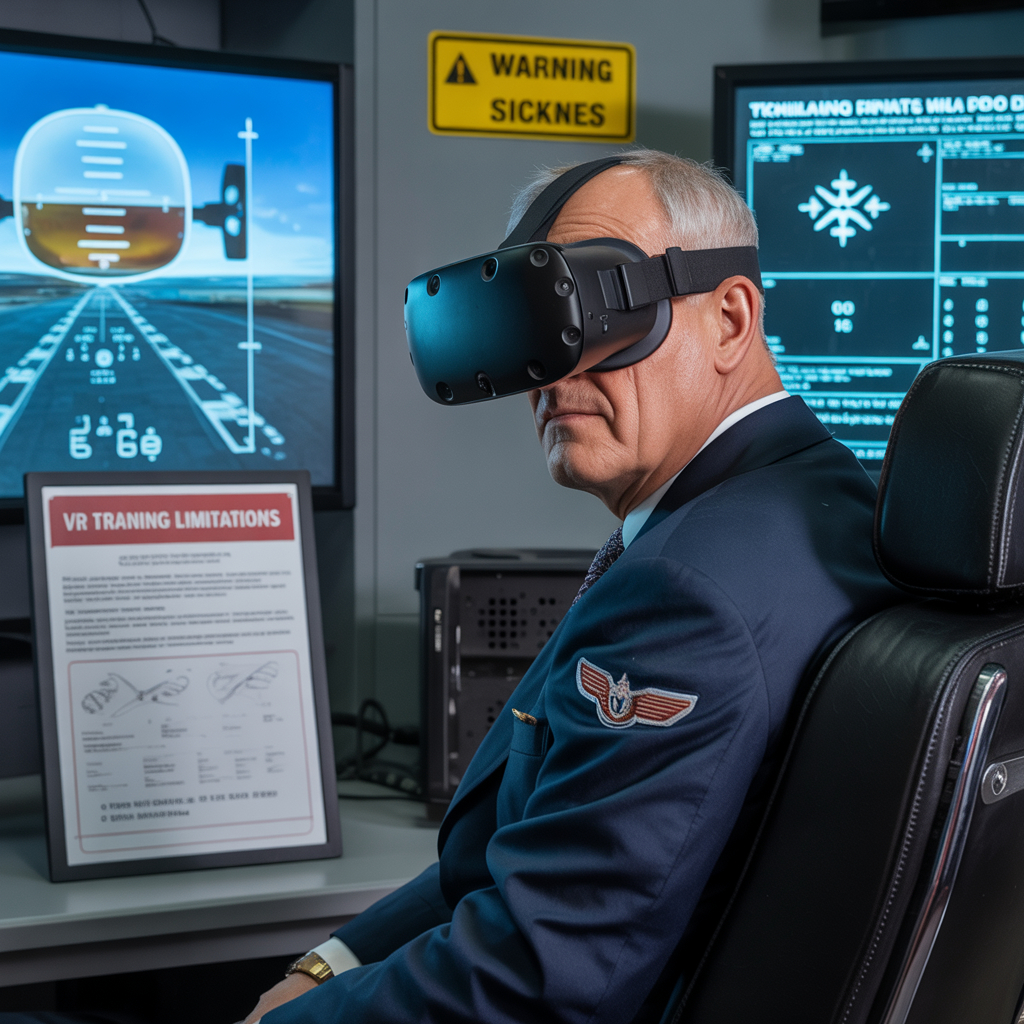
Create a realistic image of a concerned middle-aged white male pilot looking at a VR headset with a skeptical expression, sitting in a dimly lit training room with warning signs about simulator sickness visible, technical glitches appearing on nearby screens showing flight data, and a document labeled "VR Training Limitations" prominently displayed on the desk.

Despite progress, challenges persist:

  • Cybersickness: A 2024 study in Human Factors found that 20-30% of VR users experience nausea or disorientation due to prolonged HMD use. Mitigation strategies include higher refresh rates (e.g., 120Hz in Varjo XR-4) and gradual acclimatization protocols, as recommended by the Defence Research and Development Canada (DRDC) in 2025 (Lawson et al., “Mitigating Cybersickness in VR Training,” 2024; DRDC, “VR Acclimatization Guidelines,” 2025).

  • Initial Costs and Infrastructure: Upfront investments in VR systems deter smaller operators. Cloud-based VR platforms and government subsidies, as proposed in a 2025 European Commission report, are reducing barriers (European Commission, “Aviation Training Innovation Funding,” 2025).

  • Instructor Adaptation: Instructors require training to leverage VR effectively. The 2025 WATS highlighted the need for standardized educator certification programs (WATS, “2025 Summit Proceedings,” 2025).

  • Simulation Fidelity Gaps: While VR replicates visuals well, some tactile feedback systems lag. Ongoing research, such as Boeing’s 2025 haptic feedback trials, aims to close this gap (Boeing, “Haptic VR Advancements,” 2025).

Regulatory Progress and Certification

Regulatory bodies have made significant strides in approving VR for flight training:

  • EASA Updates: In 2024, the European Union Aviation Safety Agency (EASA) amended its Certification Specifications for Flight Simulation Training Devices (CS-FSTD) to qualify VR devices as full-flight simulators for specific procedures, such as cockpit familiarization and emergency drills. This allows pilots to earn certification credits, as outlined in EASA’s 2024 guidance document (EASA, “CS-FSTD Revision 3,” 2024). By mid-2025, this led to a 40% increase in VR adoption across European flight schools.

  • FAA Developments: The Federal Aviation Administration (FAA) is finalizing VR and Extended Reality (XR) certification guidelines. A 2025 FAA report noted ongoing trials to validate VR for type ratings, with preliminary data showing comparable performance to traditional simulators (FAA, “XR in Pilot Training: Progress Report,” 2025). Blogs from the 2025 World Aviation Training Summit (WATS) indicate accelerated regulatory progress.

  • Global Standards: The 2025 WATS emphasized XR integration, with panels discussing standardized metrics for safety and simulation fidelity. The International Civil Aviation Organization (ICAO) is developing global guidelines for VR training, expected by 2026 (WATS, “2025 Summit Proceedings,” 2025).

These regulatory shifts have reduced barriers, enabling VR to contribute to mandatory training hours.

Real-World Case Studies and Implementations

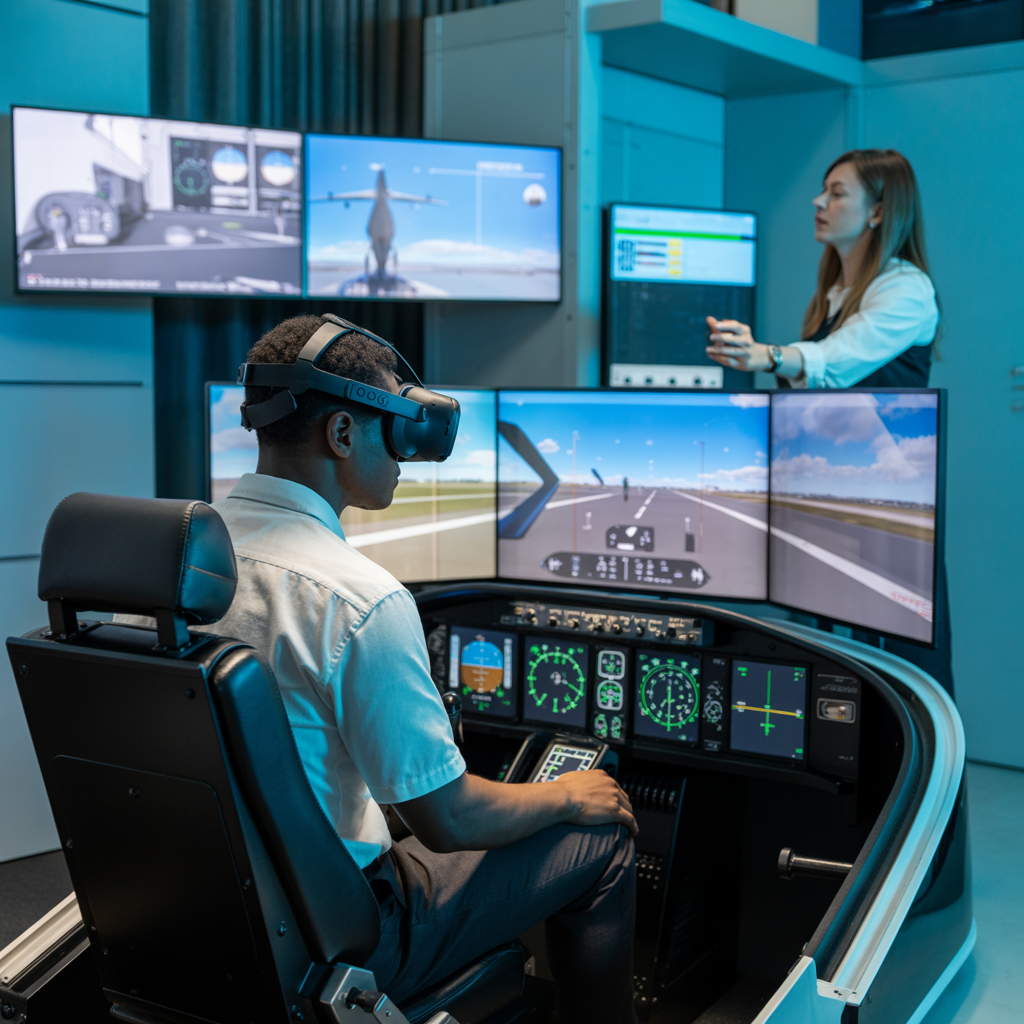
Create a realistic image of a modern flight simulator setup with a Black male pilot trainee wearing a VR headset, sitting in a cockpit mockup with multiple screens displaying flight data, while a white female instructor monitors his progress on a separate screen showing real-time analytics, in a professional training facility with other simulator pods visible in the background.

VR’s practical applications span commercial, military, and regional aviation:

· CAE’s Project CAVOK (2024): This initiative integrates AR/VR for pilot and technician training to address global pilot shortages. Embry-Riddle Aeronautical University’s 2025 trials with CAVOK showed 30% faster solo flight readiness compared to traditional methods (CAE, “Project CAVOK Impact Report,” 2025; Embry-Riddle, “VR Training Outcomes,” 2025).

· VRpilot’s Momentum: In 2025, VRpilot secured contracts with airlines like Qatar Airways and Lufthansa, providing VR modules for cockpit familiarization and emergency drills. User data reported 75% knowledge retention versus 10% for lectures, per VRpilot’s 2025 analytics (VRpilot, “Training Impact Metrics,” 2025).

· CommuteAir’s VR Deployment: Since January 2024, CommuteAir has used Visionary Training Resources’ VR headsets for new-hire training, reducing onboarding time by 20%. A 2025 case study highlighted improved procedural accuracy (CommuteAir, “VR Training Case Study,” 2025).

· Military Applications: The U.S. Air Force’s Project Fusion, launched in 2024, combines VR and AI for intuitive training. A 2025 report noted that courses were shortened from 12 to 4 months with no loss in competency (U.S. Air Force, “Project Fusion Evaluation,” 2025).

· Nolinor and VRPilot Collaboration (2025): Canadian airline Nolinor integrated VR for Boeing 737-200 training, enhancing preliminary sessions before full-motion simulators. Early results showed a 25% reduction in simulator hours needed (Nolinor Aviation, “VR Training Update,” 2025).

These implementations underscore VR’s scalability and measurable impact across diverse aviation contexts.

Flight schools' experiences and results

Flight schools across the board are seeing crazy results with VR. FlightSafety International reported students reaching proficiency 15-20% faster after implementing VR pre-training sessions.

ATP Flight School, America's largest, integrated VR modules in 2020, and saw students nail landings with fewer actual attempts. The cost savings were massive - students needed fewer physical flight hours to reach the same skill level.

Even smaller operations like California-based Sierra Academy found VR particularly effective for instrument training. Students who struggled with instrument flying in actual aircraft often had breakthroughs after practicing in VR environments where instructors could pause scenarios and provide immediate feedback.

Future Outlook: Beyond 2025

Create a realistic image of futuristic VR pilot training equipment with advanced holographic displays showing aircraft simulations, a mixed reality cockpit interface with haptic feedback controls, and a sleek research lab environment with blue-tinted lighting, suggesting cutting-edge aviation technology still under development.

The trajectory for VR in flight training is promising:

· AI-Driven Hyper-Personalization: By 2027, AI will further tailor training, predicting performance issues and optimizing syllabi, as forecast by Gartner’s 2025 aviation tech report (Gartner, “Aviation Technology Trends,” 2025).

· Metaverse-Style Training: Collaborative, cloud-based platforms will enable global training networks, allowing international crews to train together, per a 2025 IATA vision paper (IATA, “Future of Aviation Training,” 2025).

· Sustainability Benefits: VR reduces fuel consumption in training flights, supporting aviation’s net-zero goals, as emphasized in a 2025 ICAO report (ICAO, “Sustainable Aviation Training,” 2025).

· Expanded Applications: VR will deepen integration in maintenance, cabin crew training, and air traffic control, with Thales projecting a 50% market share by 2030 (Thales, “XR in Aviation Forecast,” 2025).

By 2030, VR could account for 50% of training hours, fundamentally reshaping aviation workforce development (Aviation Week, “VR Training Projections,” 2025).

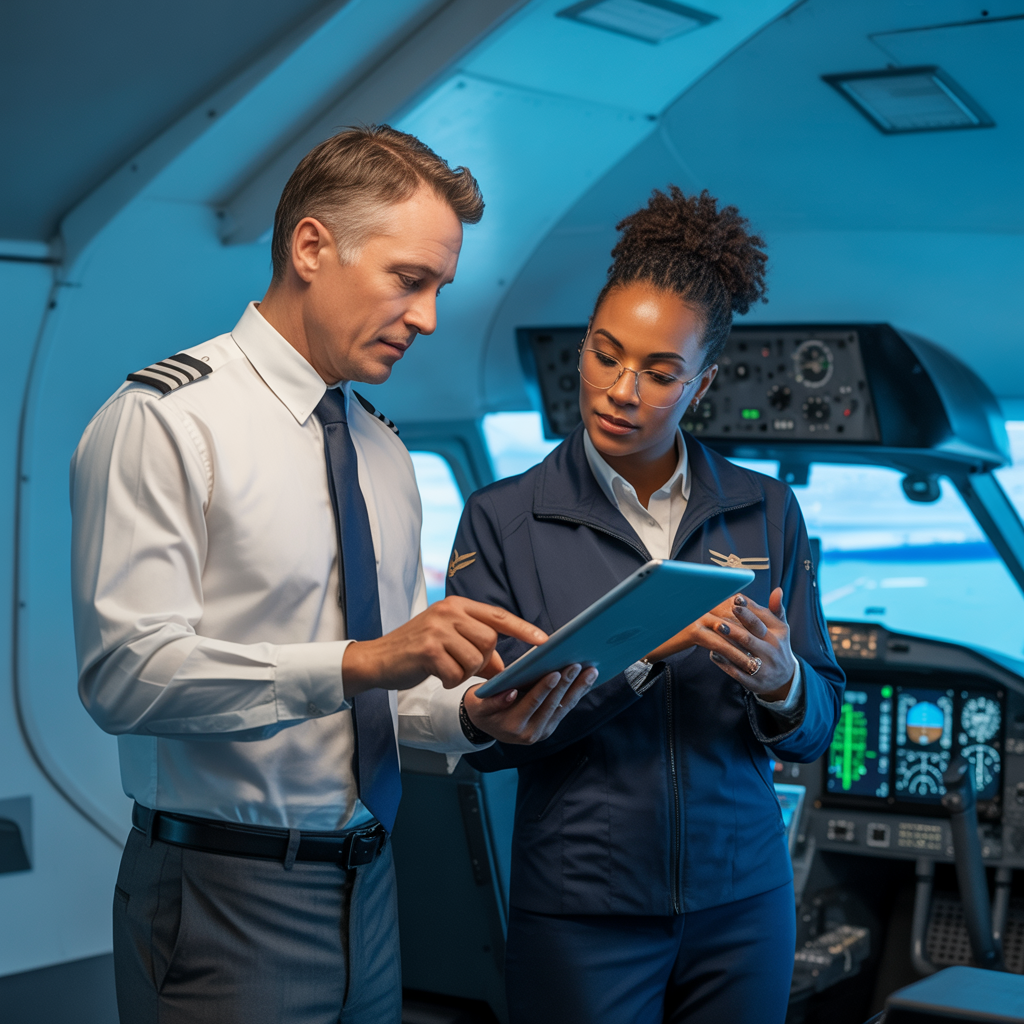
Create a realistic image of a professional pilot (white male) and a flight instructor (black female) reviewing VR training data on a tablet while standing in a modern flight simulator facility, with a real cockpit visible in the background, conveying a blend of traditional and advanced training methods in a serious, professional atmosphere with soft, blue-tinted lighting.

Conclusion

Virtual reality has transformed pilot training from traditional simulators to immersive environments that replicate real flight conditions with unprecedented accuracy. The evidence is clear: VR training improves skill retention, reduces training time, creates safer learning environments for dangerous scenarios, and significantly cuts costs for airlines and flight schools. While concerns about physical side effects and the absence of physical controls present challenges, the technology continues to evolve rapidly.

As major airlines and military organizations increasingly integrate VR into their training programs, the question is no longer whether virtual reality is a game-changer for pilot training—it clearly is. As of September 2025, VR is a mature, transformative force in flight training, supported by regulatory advancements, AI integration, and widespread adoption. Challenges like cybersickness and initial costs are being addressed through technological and policy innovations. With continued investment, VR will redefine aviation training, producing safer, more skilled professionals for traditional and emerging aircraft like eVTOLs. The synergy of VR, AR, and AI heralds a future where training is immersive, data-driven, and globally accessible.


Author: G R  Mohan

Safety Concerns on Airbus A320 Family: An Overview

Background The in-flight upset recently experienced by a JetBlue aircraft, followed by the  Emergency Airworthiness Directive (EAD) that led...